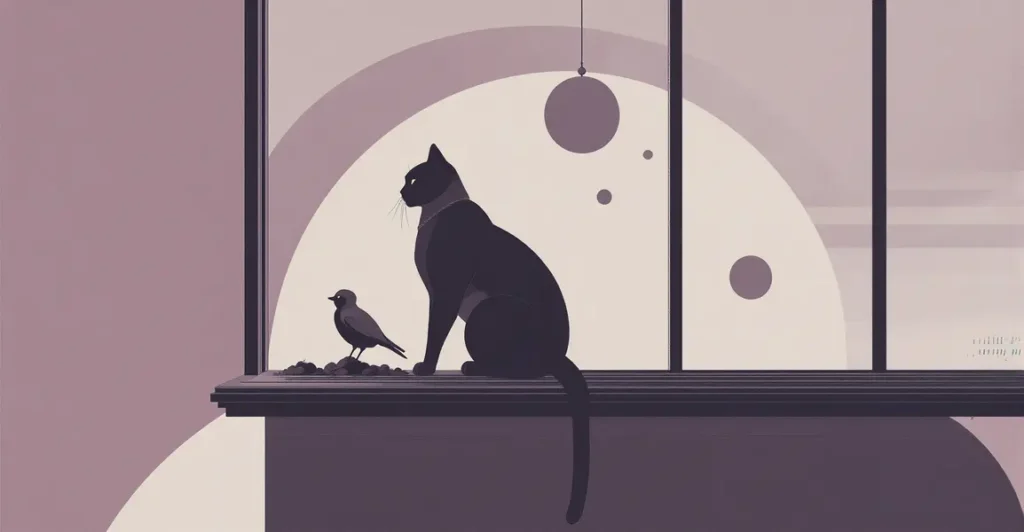
Illustration of a calm cat watching a bird from a windowsill with abstract dopamine molecule shapes floating in a magenta gradient background

What Is Dopamine Fasting? The Science Behind the Brain Reset Trend

What is dopamine fasting? It is a structured break from the activities that flood your brain with quick, repeated hits of stimulation. Phones, social feeds, junk food, gambling, porn, gaming, even ambient background music. The name is misleading on purpose, because the goal is not to drain dopamine from your bloodstream like water from a sink. Dopamine fasting is really about cutting the loop between trigger and reward long enough that boring things start feeling interesting again. This guide walks through where the idea came from, what the neuroscience actually says, how people run a fast, what the criticism looks like, and why your cat has been quietly doing this since the day you got it.

Table of Contents

What Is Dopamine Fasting, in One Sentence

What is dopamine fasting in plain language. It is a chosen period (a few hours, a day, sometimes a weekend) during which you avoid the behaviors that give you a quick spike of pleasure, so the rest of your day starts to feel rewarding again. That is the whole concept. Not lower dopamine, not zero dopamine. Just a deliberate pause from the inputs that keep your reward system spinning at red line. The same instinct sits behind minimalism as an attention strategy, the Gen Z dumb phone trend, and the older idea of a quiet Sunday.

Where Dopamine Fasting Came From: Cameron Sepah and Silicon Valley

Dopamine fasting as a named practice traces back to 2019, when Cameron Sepah, a clinical psychologist working with tech executives in San Francisco, published a piece on Medium describing what he called Dopamine Fasting 2.0. The framework was a cognitive behavioral therapy tool repackaged with a catchy name. Sepah listed six categories of impulsive behavior he wanted his clients to take breaks from: emotional eating, internet and gaming use, gambling and shopping, porn and masturbation, thrill and novelty seeking, and recreational drugs. The plan was simple. Pick one or more categories, decide on a window (one hour after work, one day a week, one weekend a month), and abstain.

The name caught fire in tech circles within months, partly because Silicon Valley loves any health practice that sounds biohacker, and partly because the press picked up the most extreme version: tech workers locked in dark rooms refusing eye contact and food. Sepah has since said publicly that the name is misleading. The aim was never to lower dopamine in the body. The aim was to interrupt the impulsive behavior loops that dopamine helps reinforce.

The Actual Science: What Dopamine Does, and What It Does Not

Dopamine is a neurotransmitter. Your brain uses it for movement, motivation, learning, and reward prediction. Most pop articles call it the pleasure chemical. That is not quite right. Dopamine is closer to the anticipation chemical. It spikes when you expect a reward, more than when you actually get one. The classic experiment: a monkey gets juice after a light flashes. After enough repetitions, the dopamine spike moves from the moment the juice arrives to the moment the light flashes. Your brain is constantly making predictions about what will feel good next, and dopamine is the chemical signature of that prediction.

Why Phones Feel So Sticky

This is why infinite scroll, slot machines, and notification badges are so effective. They train your brain to expect a reward at every pull, even though most pulls deliver nothing. The variable schedule keeps the dopamine system in a constant low-grade anticipation state. You are not feeling pleasure when you check your phone for the fortieth time today. You are feeling the chemical residue of expecting pleasure.

What Dopamine Fasting Does Not Do

You cannot lower your baseline dopamine by avoiding stimulation for a day. Dopamine is not built up like a bathtub that empties when you ignore your phone. Your neurons keep producing it, your receptors keep listening for it, and a 24-hour break does not measurably change either side of the equation. Harvard Medical School published a piece in 2020 calling the literal interpretation of dopamine fasting a misunderstanding of how the chemical works. Ciara McCabe, an associate professor of neuroscience at the University of Reading, used the word “nonsense” when asked if the brain could be reset this way.

How People Run a Dopamine Fast in 2026

The practice has settled into a few common formats. Most people do not lock themselves in a dark room. They do something closer to a hobby weekend with rules.

  • The 24-hour version. One full day, usually Saturday or Sunday, with no phone scrolling, no streaming, no social apps, no junk food. Walks, books, conversation, cooking from scratch, sleep.
  • The evening version. Two or three hours every night with no screens, no notifications, no music with lyrics. Often paired with sleep hygiene since both target the same wind-down window.
  • The category version. Pick one specific behavior (gambling, porn, gaming, doomscrolling) and abstain from that single category for a week or a month, while keeping everything else normal.
  • The travel version. A weekend somewhere with no cell signal. The constraint does the work for you. Many of the people writing the most enthusiastic dopamine fasting posts are describing what most generations would just call a camping trip.

Health writers at the Cleveland Clinic, Calm, and Medical News Today all converge on similar advice for the fast itself: keep sleep at seven to nine hours, eat balanced meals, exercise, get sunlight, and replace the avoided behaviors with low-intensity activities like reading, drawing, walking, gardening, or staring out a window the way your cat does for half its day.

The Criticism: Harvard, Healthline, and the Word “Nonsense”

The medical literature on dopamine fasting is small and largely critical of the name. The 2020 Harvard Health blog post is widely cited. The Live Science explainer ran a piece in 2019 titled “Is There Actually Science Behind Dopamine Fasting?” with the answer landing on “not really, but the underlying behavior change is fine.” Ohio State Health and Healthline both call the dopamine framing wrong while supporting the practice of cutting impulsive behaviors. A 2024 literature review in the JETIR journal looked at 30+ papers and concluded the same: the brand is wrong, the behavior is reasonable.

There is a sharper critique that comes up less in mainstream coverage. Extreme dopamine fasting has been associated with patterns that look like avoidant behavior, social withdrawal, and disordered eating. A person who skips meals, avoids people, and refuses to listen to music for a weekend because they read a tech newsletter is not necessarily doing themselves good. Doctors who work with eating disorders have flagged the fasting frame as one more vocabulary that can be misused to justify restriction.

What Actually Works If the Concept Is Mostly Wrong

Most experts who criticize the neuroscience also concede that the behavior change is sound. Cutting back on compulsive phone use, skipping infinite scroll for a few hours, choosing low-stimulation activities, getting outside, talking to a real person in real time. These are good interventions. They just do not need a dopamine theory to explain why they work.

The real mechanism is closer to extinction learning, a well documented branch of behavioral psychology. If you stop pairing a trigger (boredom, anxiety, lull at work) with a reward (phone scroll, snack, video), the brain slowly weakens the association. You become less reactive to the trigger. The pull of the behavior reduces. It is not a chemical reset. It is unlearning a habit. That is the same mechanism that explains why exposure therapy works for phobias, why pet trainers can teach cats to stop scratching the couch, and why you eventually stopped checking BlackBerry email at dinner.

Why Your Cat Already Won This Game

Watch a cat for an afternoon. It eats, it sleeps for 14 hours, it stares out the window at a single bird for 40 minutes without moving, it knocks one object off a counter as a controlled experiment in physics, then it sleeps again. There is no infinite scroll, no algorithm, no inbox. There is also no dopamine deficit. The reward system is healthy because the inputs are sparse and the reactions are full.

This is not a joke. Researchers studying cat behavior at the University of California have shown that domestic cats spend roughly 70 percent of their day in low-activity states, broken by short bursts of intense hunting play that look exactly like the kind of dopamine spike a human would chase through their phone. The pattern is sparse, novel, embodied, and self-limiting. The cat does not need to fast. Its baseline already looks like what a human dopamine faster is trying to recover.

The same logic shows up in adjacent internet culture. The whole aesthetic of liminal space and the appeal of cassette tape revivals are reactions to over-stimulation. People are nostalgic for friction. Cats live in friction by default.

A Reasonable Way to Try It Yourself

If you want to test dopamine fasting without falling into the cult version, here is a sensible starting protocol that aligns with what most clinicians actually recommend.

  1. Pick one trigger behavior. Phone scrolling is the easiest target. Do not try to quit six things at once.
  2. Set a window. Two hours after dinner, or one full Saturday morning. Short enough that you will not break the agreement with yourself.
  3. Remove the temptation physically. Put the phone in another room. Sign out of the app. Leave the charger downstairs.
  4. Replace, do not just remove. Have a book, a walk, a sketch pad, a meal to cook, a conversation to have. Empty time becomes scrolling time on autopilot.
  5. Keep food, water, sleep, and exercise normal. The fast is about behavior, not biology. Do not skip meals.
  6. Repeat weekly. The change is cumulative. One Saturday does nothing measurable. Twelve Saturdays in a row will rewire the trigger response.

The same approach extends naturally to learning sticky information without doomscrolling for distraction (see why your brain loves repeating patterns) and to the deeper question of how digital tools should serve attention rather than steal it (the MCP protocol is one example of building tools that respect that boundary).

FAQ

Does dopamine fasting actually lower dopamine in the brain?

No. Your baseline dopamine production stays roughly the same regardless of whether you scroll or read a book. The practice is about interrupting impulsive behavior loops, not draining a chemical pool. Neuroscientists at Harvard and the University of Reading have specifically pushed back on the literal reading of the name.

How long should a dopamine fast last?

Most clinicians who tolerate the framing suggest short repeated fasts: two to three hours per evening, one full day per week, or one weekend per month. Multi-day extreme versions are unnecessary and can slide into avoidance or restriction patterns.

Is dopamine fasting safe?

The moderate version (skip phone, watch a sunset, cook a meal) is safe for most healthy adults. Extreme versions that involve fasting from food, isolation from other people, refusing eye contact, or skipping sleep are not safe and can worsen anxiety, eating issues, or social withdrawal. If you have a history of disordered eating, talk to a doctor before adopting any framework that uses the word “fasting.”

Is it the same as a digital detox?

Mostly yes. Digital detox is a narrower version focused on screens. Dopamine fasting in its original framing is broader and can include food, gambling, porn, and novelty-seeking behavior. In practice most people use the two terms interchangeably and target their phone first.

Will I feel withdrawal symptoms?

For short fasts most people report restlessness, a strong urge to check the phone in the first hour, mild boredom, then a settled feeling. There is no clinical withdrawal from a one-day break unless you are quitting a substance with actual physical dependence (alcohol, nicotine, certain prescription drugs), in which case dopamine fasting is the wrong tool and you should consult a clinician.

Final Thought

What is dopamine fasting, really? It is a misnamed but mostly useful invitation to stop pulling the lever for a few hours and see what your brain does when nobody is feeding it. The science of the name is wrong. The practice is fine. Cats have been doing the right version since before words existed. If you want a reset that the data actually supports, put the phone in another room, look out a window, and trust that boredom is not an emergency. The reward system will recalibrate. It does not need a hashtag to do its job.


🐾 Visit the Pudgy Cat Shop for prints and cat-approved goodies, or find our illustrated books on Amazon.

Stay Curious, Stay Engaged!
Get our best stories delivered weekly. No spam, no fluff.
Share this story

Leave a Reply

Your email address will not be published. Required fields are marked *