What Is a Bildungsroman? The Coming-of-Age Novel, Explained
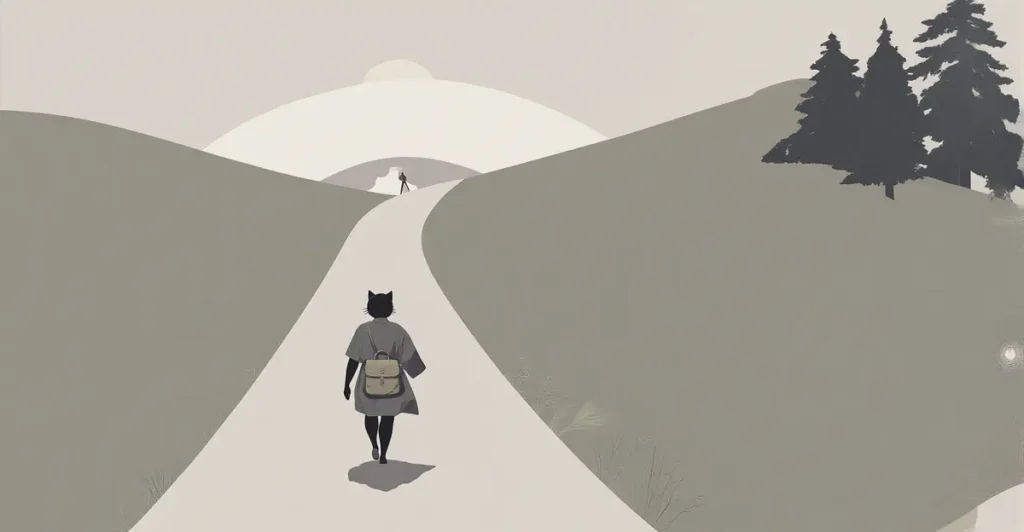
A bildungsroman is a coming-of-age novel that follows one character from a green, unformed youth into a more settled adult understanding of the world. The word looks intimidating, all German consonants and a silent shrug, but the idea behind it is the most familiar story shape we have. Someone young leaves the safety of home, gets knocked around by experience, makes a few spectacular mistakes, and comes out the other side as a person who knows something they did not know before. If you have ever finished a book and thought “they grew up over those pages,” you have read a bildungsroman, whether the cover called it that or not.
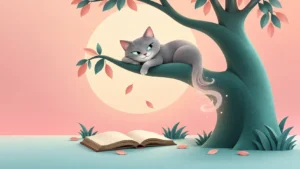
The cat has opinions about growing up, mostly that it is overrated and that naps fix more than character development does. Still, even a creature this committed to staying exactly the same can admire a good story about change. So let us pull the genre apart and look at what makes it tick, where it came from, and why writers keep returning to it three hundred years after the form got its name.
Table of Contents
- What the Word Actually Means
- The Core Traits of a Bildungsroman
- A Short History of the Form
- Types and Close Cousins
- Famous Examples Worth Knowing
- Why the Coming-of-Age Novel Refuses to Die
- How to Read One Closely
- Frequently Asked Questions
What the Word Actually Means
A bildungsroman combines two German words. “Bildung” means formation, education, or shaping, the kind that happens to a person rather than to clay. “Roman” simply means novel. Put them together and you have the “novel of formation,” a book whose whole job is to show a human being getting shaped by life. The plural, in case you want to sound unbearable at a dinner party, is “bildungsromane.”
The German origin matters because the genre was born inside a specific intellectual climate. Late eighteenth-century German thinkers were obsessed with the idea of inner development, the notion that a person carries a kind of seed of who they are meant to become, and that life either nurtures that seed or stomps on it. A bildungsroman dramatizes that process. The plot is not really about the duel or the inheritance or the doomed romance, though those things happen. The plot is about the slow internal work of becoming a self.
The Core Traits of a Bildungsroman
Genres are slippery, and no single book hits every marker. But a recognizable bildungsroman tends to share a cluster of features, and once you know them you start spotting the shape everywhere.
- A young protagonist. The story usually begins in childhood or adolescence, often with the central character feeling out of step with their surroundings.
- A loss or rupture that pushes them out. A death, a fall in fortune, a stifling home, or simple restlessness sends the hero out into a larger world.
- A journey, literal or social. The protagonist moves through new places, new classes, new circles of people, collecting experience the way other characters collect scars.
- Conflict between the self and society. The hero wants one thing, the world wants another, and the friction between the two does the shaping.
- Mentors and false friends. Guides appear, some genuine and some corrosive, and learning to tell them apart is part of the education.
- A moment of reckoning. Near the end, the character looks back and understands something about who they have become.
- Reconciliation or settled identity. The classic version closes with the hero finding a workable place in the world, though modern versions love to twist this ending.
That last beat is where the genre earns its emotional weight. A thriller resolves a plot. A bildungsroman resolves a person.
A Short History of the Form
The bildungsroman as a named tradition is usually traced to Johann Wolfgang von Goethe’s “Wilhelm Meister’s Apprenticeship,” published in 1795 and 1796. Goethe’s hero abandons a comfortable merchant future to chase a life in the theater, fumbles through love affairs and bad decisions, and gradually learns what actually suits him. The German critic Karl Morgenstern coined the term “bildungsroman” a few decades later, and Wilhelm Dilthey popularized it, which is how a single Goethe novel ended up giving its shape a permanent name.
The Victorian Boom
The form crossed borders fast. The nineteenth century, with its sprawling social novels and its appetite for the lives of strivers and orphans, was practically built for it. Charles Dickens turned the coming-of-age novel into a national pastime with “David Copperfield” and “Great Expectations,” tracking poor boys as they rose, stumbled, and learned what their ambitions actually cost. Charlotte Bronte’s “Jane Eyre” gave the form a fierce female center, following Jane from a brutal childhood to a hard-won independence.
The Modern Turn
By the twentieth century, writers started distrusting the tidy ending. James Joyce’s “A Portrait of the Artist as a Young Man” follows Stephen Dedalus toward an artistic vocation but leaves him exiled and uncertain rather than comfortably settled. The genre learned to question whether growing up means fitting in at all, and that doubt is still the engine of most contemporary coming-of-age fiction.
Types and Close Cousins
The bildungsroman is less a single thing than a family of related forms. Critics like to split it into subtypes, and knowing the labels helps you describe what kind of growing-up story you are actually reading.
- Entwicklungsroman. A novel of general personal development, broader and looser than the strict bildungsroman, where any kind of growth counts.
- Erziehungsroman. A novel of education in the literal sense, where formal teaching and training drive the change.
- Kunstlerroman. A subtype focused on the formation of an artist specifically, where the protagonist’s growth and their creative awakening are the same story. Joyce’s “Portrait” is the textbook case.
- Apprenticeship novel. The English-language nickname for the whole tradition, borrowed straight from Goethe’s title.
The genre also sits next to other forms that share its DNA. Coming-of-age stories appear constantly in contemporary young adult fiction, and the line between a literary bildungsroman and a sharp YA novel about a teenager figuring herself out can be thin. Our look at how Sarah Dessen keeps writing grounded contemporary YA in a market obsessed with dragons shows how alive the growing-up story still is in that space.
Famous Examples Worth Knowing
If you want to read your way into the bildungsroman, a handful of books map the territory well. None of them require you to enjoy the word itself.
- “Great Expectations” by Charles Dickens. Pip wants to become a gentleman and learns that the wanting is the real trap.
- “Jane Eyre” by Charlotte Bronte. A poor governess insists on her own moral worth in a world built to crush it.
- “The Catcher in the Rye” by J.D. Salinger. A short, prickly, anti-establishment take that questions whether the adult world is even worth joining.
- “To Kill a Mockingbird” by Harper Lee. Scout grows up by watching adults fail and refuse to fail, all in one summer.
- “The House on Mango Street” by Sandra Cisneros. A coming-of-age told in short, lyrical vignettes rather than a single sweeping plot.
- “Never Let Me Go” by Kazuo Ishiguro. A quietly devastating version where the formation happens under conditions the reader slowly comes to dread.
Notice how varied these are. A Victorian doorstopper and a slim book of vignettes can both be bildungsromane, because the label describes a movement of the soul, not a page count or a setting.
Why the Coming-of-Age Novel Refuses to Die
Plenty of literary forms have come and gone. The verse epic faded, the epistolary novel mostly retired, and nobody is rushing to revive the eighteenth-century moral fable. The bildungsroman, by contrast, just keeps showing up, repainted for every generation. There are a few reasons it has this kind of staying power.
The first is that everyone has lived the basic plot. We were all young, confused, and convinced the adults around us had no idea what they were doing. A coming-of-age novel hands us a mirror that flatters and stings at the same time, and that mix is hard to resist. The genre also gives writers a clean structure. Growth has a natural arc, beginning in ignorance and ending in some form of knowing, so the form supplies momentum without forcing the author to invent a murder or a war.
There is also a cultural angle. Every era has fresh anxieties about what it means to become an adult, and the bildungsroman is the form that absorbs them. The reading habits of the young are a constant subject of public worry, which is exactly why a story like the collapse of reading for pleasure among UK kids lands so hard. Coming-of-age novels are where a culture argues with itself about how the next generation should turn out.
Finally, the form is endlessly hackable. You can write a bildungsroman as straight realism, as a fantasy quest, as autofiction, or as something genuinely strange. The growing-up engine bolts onto almost any genre chassis, which is why you find its fingerprints on books shelved as far from “literary fiction” as you can get. If you enjoy watching genres get blurred and recombined, our guide to what weird fiction actually is covers another tradition that thrives on bending its own rules.
How to Read a Bildungsroman Closely
Reading a bildungsroman with a little intention pays off, because the genre buries most of its meaning in change over time rather than in any single scene. A few habits help you catch it.
- Track the gap between the early and late versions of the character. Note how they speak, what they want, and who they trust at the start, then check those same things at the end.
- Watch the mentors. Ask whether each guide is helping the hero become themselves or just remaking the hero in their own image.
- Find the turning point. Most coming-of-age novels have one scene where the protagonist can no longer go back to who they were. Mark it.
- Question the ending. Does the book reward growing up or mourn it? The answer tells you what the author actually believes about adulthood.
If you tend to forget the fine grain of a long novel by the time you reach its payoff, you are not alone, and a little structure helps. Our guide to how to remember what you read pairs well with this kind of slow, developmental story, where the meaning depends on holding the beginning in your head while you read the end.
One more tip. Genre labels are tools, not cages. A book can be a bildungsroman and a mystery and a love story all at once, much like the way magical realism and surrealism overlap and diverge in ways that only matter once you start looking closely. Use the label to sharpen your reading, then let the book be whatever it actually is.
Frequently Asked Questions
Is a bildungsroman the same as a coming-of-age story?
They overlap heavily, and most people use the terms interchangeably. The narrow difference is that “bildungsroman” carries a literary and historical weight, pointing back to the German tradition and its focus on inner formation, while “coming-of-age” is a broader, friendlier umbrella that covers films, plays, and casual storytelling too. Every bildungsroman is a coming-of-age story, but not every coming-of-age story aims for the depth the older term implies.
How do you pronounce bildungsroman?
Roughly “BIL-doongs-roh-mahn,” with the stress on the first syllable. The German “u” sounds closer to “oo” than the English “uh,” and the final “roman” rhymes loosely with “no man.” Nobody will arrest you for getting it slightly wrong.
Does the protagonist have to be a child or teenager?
Usually the story begins in youth, but the formation can stretch well into early adulthood. The defining trait is the arc from inexperience to a more settled understanding, not a specific age. Some modern novels even play with late or interrupted coming-of-age, following characters who grow up much later than the classic model expects.
Can a fantasy or science fiction book be a bildungsroman?
Absolutely. The coming-of-age engine runs perfectly well inside any setting. A great deal of fantasy follows a young hero learning their power and their place, which is the bildungsroman shape wearing a cloak. The genre label describes the character’s internal journey, so the magic system or the spaceship is just scenery around it.
Why does the genre have a German name?
Because German critics and writers defined it first. The form crystallized around Goethe’s “Wilhelm Meister’s Apprenticeship” in the 1790s, and German scholars gave it the name that stuck. English literature adopted the form enthusiastically, but it kept the original label rather than inventing a homegrown one.
The Story That Stays
A bildungsroman is the literature of becoming, a record of one person turning into the next version of themselves through experience, error, and the occasional kind teacher. The word is old and the form is older, but the appeal never ages, because growing up is the one plot none of us escape. The next time a novel leaves you feeling like you traveled a whole life alongside someone, you will know exactly what shape you just lived through, and you will have a slightly absurd German word for it. The cat, predictably, remains uninterested in personal growth and deeply interested in lunch.
🐾 Visit the Pudgy Cat Shop for prints and cat-approved goodies, or find our illustrated books on Amazon.


Leave a Reply