
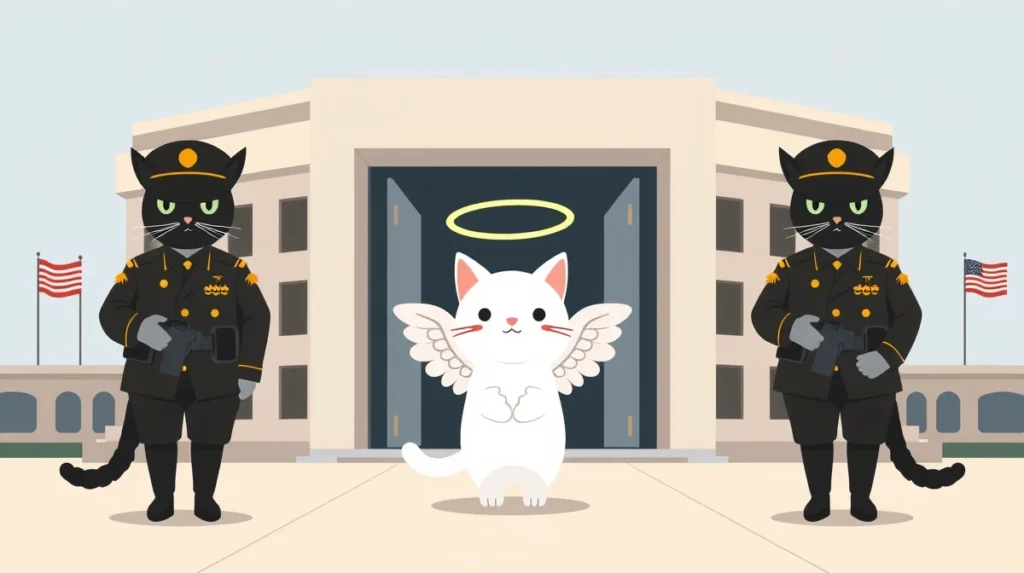
Anthropic said no to the Pentagon. Trump made them pay for it. And then OpenAI swooped in with the contract — but with the same ethics rules. Yeah, it’s a lot.
On February 27, 2026, a very weird thing happened: an AI company got blacklisted by the U.S. government for having principles.
Anthropic — the company behind the Claude AI assistant — refused to remove its ethical guidelines for the Pentagon. The Department of Defense wanted Anthropic to loosen the restrictions on how its AI could be used. Anthropic said no. Trump ordered every federal agency to immediately stop using Anthropic technology. Defense Secretary Pete Hegseth declared the company a national security risk.
And hours later, OpenAI — which just raised $110 billion — announced it had signed a deal with the Pentagon to fill the gap. Plot twist: with the same ethical red lines Anthropic refused to remove.
Let’s break this down, because it’s wild.
What Did the Pentagon Actually Want?
Anthropic and the Pentagon had an existing $200 million, two-year agreement to develop responsible AI for defense operations. That deal had conditions — ethical guardrails that Anthropic built into Claude to prevent specific uses.
The two main sticking points? The Pentagon apparently wanted flexibility around:
- Autonomous weapons systems — AI that can make lethal decisions without human involvement
- Mass surveillance — using AI to monitor civilians at scale
Anthropic drew the line. These weren’t minor policy disagreements — they were core ethical commitments baked into how the company operates. And Anthropic held firm even as Trump weighed in personally on Truth Social, calling them "leftwing nut jobs" who were "strong-arming the Department of War."
When the deadline passed, Hegseth moved fast. Anthropic was officially designated a supply-chain risk to national security — a designation normally reserved for foreign adversaries like Chinese telecom companies. Every contractor, supplier, or partner working with the U.S. military was told to cut commercial ties with Anthropic immediately.
Why Did Anthropic Say No?
To understand this, you need to understand what Anthropic is, philosophically. Founded by Dario Amodei and others who left OpenAI over safety concerns, Anthropic’s entire brand is built around the idea that AI safety isn’t a nice-to-have — it’s existential.
Their model, Claude, is trained with a technique called Constitutional AI, designed to make it less likely to be weaponized for harmful purposes. Removing those constraints wouldn’t just be a business decision. It would undermine the core argument that safety-first AI development is viable.
Anthropic isn’t naive about the commercial hit. A $200 million contract is serious money. But the company bet that bending to these demands would set a precedent far more costly — both reputationally and in terms of what AI might actually do in the world.
The Irony of Being Called a National Security Risk
Here’s where it gets surreal. Anthropic’s stated reason for refusing was: we won’t let AI operate without human oversight, and we won’t enable mass surveillance of Americans.
The government’s response: that makes you a threat to national security.
Think about that for a second. A company saying "humans should remain in control of lethal AI" got labeled an adversary. It’s the kind of sentence that sounds like a dystopia writing prompt — except it actually happened.
So OpenAI Stepped In — But Here’s the Twist
Within hours of Anthropic being blacklisted, Sam Altman announced OpenAI had struck a new deal with the Pentagon to supply AI to classified military networks. The timing was impeccable — or suspicious, depending on your read.
But Altman made a point of publishing the terms publicly. And the terms? Nearly identical to what Anthropic refused to remove.
From Altman’s own statement:
"Two of our most important safety principles are prohibitions on domestic mass surveillance and human responsibility for the use of force, including for autonomous weapon systems. The Pentagon agrees with these principles, reflects them in law and policy, and we put them into our agreement."
So OpenAI got the contract — with the same ethical restrictions. Which raises an obvious question: why couldn’t the Pentagon accept the same terms from Anthropic?
Altman even called for the Pentagon to offer "these same terms to all AI companies" to de-escalate the situation. Which reads like a direct message to the administration: this didn’t need to happen.
What Happens to Anthropic Now?
It’s bad, but not catastrophic — at least not immediately.
- The existing $200 million contract will continue for a transition period of up to six months
- The supply-chain risk designation blocks all new DOD partnerships
- Other government agencies (including the GSA) have followed Trump’s directive to cease Anthropic usage
- Private sector and non-U.S. government customers are unaffected — for now
Anthropic still has major commercial partnerships — with Amazon (which invested $4 billion), Google, and countless enterprise customers. The federal market is a real loss, but it’s not the end of the company.
What’s harder to quantify is the reputational effect in both directions. In Silicon Valley and among safety-conscious AI researchers, Anthropic just became a symbol of standing firm. In Washington and with defense contractors, they’re now the company that blinked from a government contract.
The Bigger Picture: AI Ethics at a Crossroads
This story isn’t really about one company and one contract. It’s about a question that’s going to define the next decade of AI development:
Can you build AI with genuine ethical constraints — and survive commercially?
The optimistic read: OpenAI’s deal proves you can. The Pentagon ultimately accepted responsible use principles when the alternative was having no AI provider at all. Ethics won, in a roundabout way.
The pessimistic read: Anthropic got blacklisted, had its government revenue cut, and was called a national security threat for having a conscience. The lesson governments could take from this is: push harder, and companies will fold.
Either way, the stakes around AI governance just got very real, very fast. This is no longer a hypothetical debate about what AI might do. It’s a live argument about what we’re willing to let it do — and who gets to decide.
FAQ: Anthropic Pentagon Ban
Why did Trump ban Anthropic?
Trump ordered federal agencies to stop using Anthropic technology after the company refused to modify its AI ethical guidelines to meet Pentagon demands. The specific sticking points were Anthropic’s prohibitions on autonomous weapons and mass surveillance use cases.
Is Anthropic still operating?
Yes. Anthropic continues to operate normally for commercial customers. The ban affects U.S. federal government agencies and contractors that work with the military. The company’s existing DOD contract has a six-month transition period.
What is OpenAI’s Pentagon deal?
OpenAI signed an agreement with the Department of Defense to supply AI to classified military networks, announced hours after Anthropic was banned. The deal includes the same safety restrictions Anthropic had — prohibitions on autonomous weapons and domestic mass surveillance.
What is Claude’s Constitutional AI?
Constitutional AI is a technique developed by Anthropic to train AI models like Claude to follow a set of ethical principles. It reduces harmful outputs by training the model to critique and revise its own responses against a defined set of values.
What do you think — did Anthropic do the right thing? Or was this a costly misjudgment? Drop your take in the comments.
🐾 Curiosity looks good on you. Explore the Goodies, or find our illustrated books on Amazon.