 English
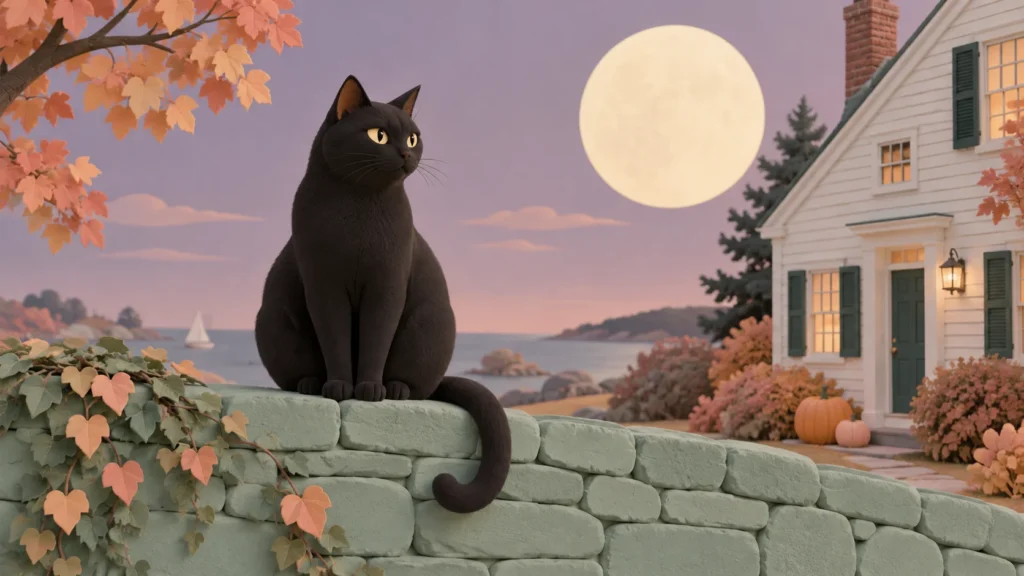
Among the witches, flying household equipment and extravagant costumes in Hocus Pocus, a black cat has some of the most serious business to attend to. Binx remembers what happened before the modern children arrived. The danger is personal to him.
That history gives the film an emotional thread through its Halloween commotion. While the Sanderson sisters dominate the spectacle, the cat keeps the consequences in view.
Who Binx was before the curse
Disney’s official film entry identifies Thackery Binx as a boy transformed into a cat after interfering with the witches. The 1993 film brings him into the adventure of Max, Dani and Allison when the Sanderson sisters return.
His knowledge changes the balance between the characters. The modern children are learning the rules of their predicament; Binx has already lived with its consequences. A warning from him carries a different weight from a spooky legend repeated for entertainment.
You do not need the ending spoiled to notice what this does for the story. The cat gives the present-day chase a connection to an earlier family and an earlier attempt to protect someone.
A real cat in the story’s beginnings
In D23’s account of the production, producer David Kirschner recalls telling his daughter a story after a neighbour’s black cat, Sam, passed by. He imagined the animal as a boy changed into a cat while trying to protect his sister from witches. That tale helped lead to the film.
It is a pleasingly small starting point for such a busy movie. An ordinary animal crosses an ordinary evening, and someone asks who it might have been. The familiar shape makes the impossible history easier to picture.
Binx’s transformation also gives the black cat a particular role. Viewers have a reason to care about him that extends beyond seasonal decoration. He brings a memory into scenes where other characters are still treating Halloween as a night of costumes and fun.
Making a talking cat belong in the scene
The same production account describes computer-generated work used to make Binx speak. Dialogue was recorded and the animation matched to it. Sean Murray played the boy before the transformation.
A talking animal has a difficult visual job. It needs enough recognisable behaviour to remain an animal, while its mouth and timing must carry language the audience can follow. The more familiar the species, the more opportunities viewers have to notice something odd.
When revisiting the film, watch how the human performers leave room for Binx in a conversation. Their eyelines, pauses and reactions help give a small character a place in the group. The effect depends on the surrounding scene as well as the face of the cat.
The quieter part of a Halloween favourite
Our article on Cat People explores a very different use of feline imagery in film. Hocus Pocus allows its cat to be a companion through danger, with humour and grief sharing the same character.
For a Halloween rewatch, try following Binx’s place in each scene rather than concentrating only on the witches. Notice who listens to him, who needs convincing and when the pace allows his earlier life to matter.
The spectacle has plenty of ways to demand your attention. Binx gives you a reason to stay concerned when the joke is over and the children still have to get home.