 English
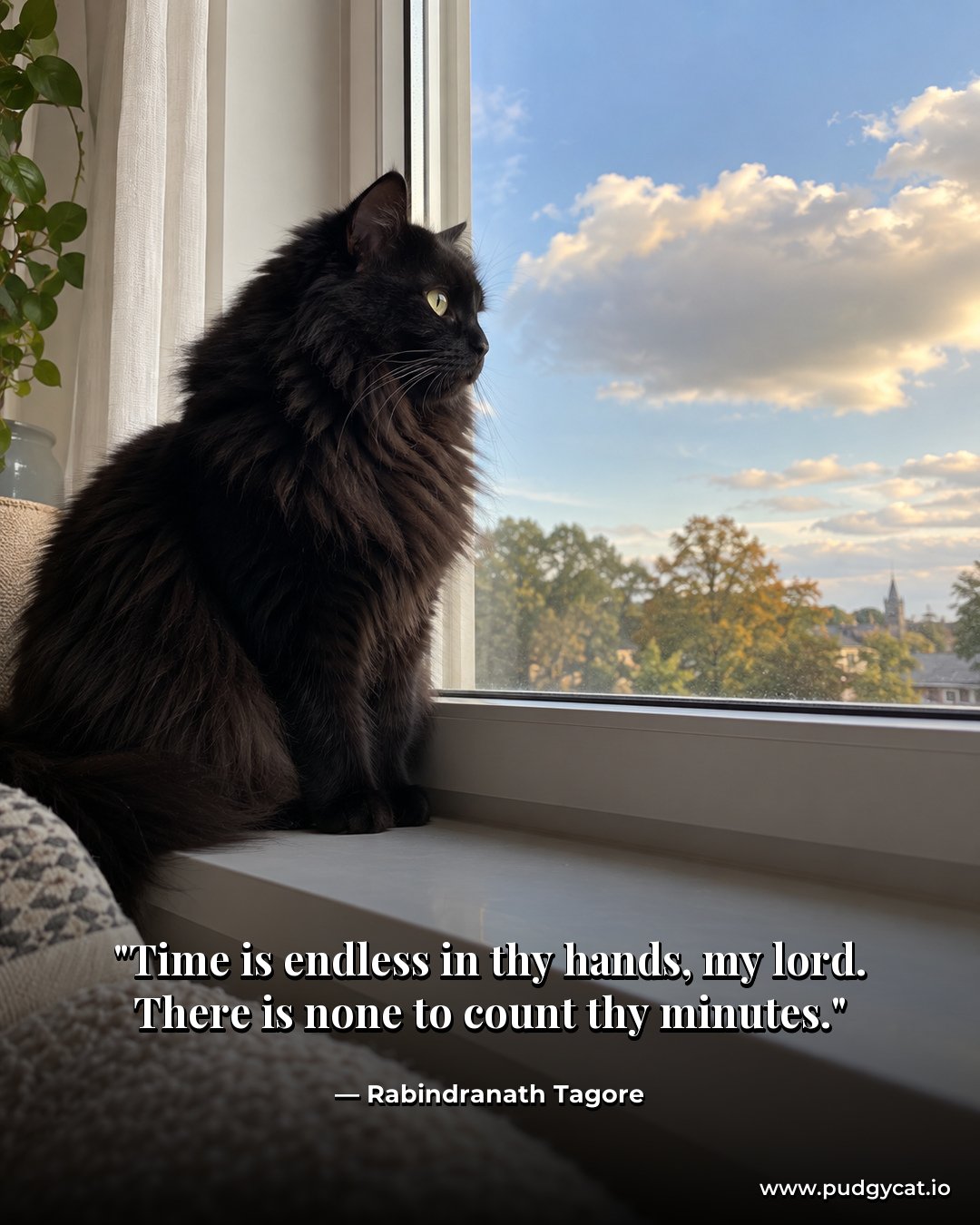
Time is endless in thy hands, my lord. There is none to count thy minutes.
Rabindranath Tagore
Source, Gitanjali, 82; English prose version by Tagore
Why This Quote Matters
In poem 82 of Gitanjali, Rabindranath Tagore addresses the divine through a contrast in time. Human minutes are counted; the speaker's lord has an endless measure. The poem continues with the patient making of a small wildflower across centuries. This is devotional poetry, and preserving that setting matters: the quotation is an address to the divine, rather than a general statement that human deadlines do not exist.
Its imagery can nevertheless offer a useful change of perspective to a hurried reader. Not every valuable process follows the pace of an anxious schedule. Understanding, trust, and careful work often resist the demand to show their finished form immediately. The poem's patience is not an excuse to ignore responsibilities. It creates a moment in which urgency is no longer the only available way of imagining time, and a small unfolding thing can receive attention without first proving that it is efficient.
The long-haired black cat looking through a window gives that slower scale an ordinary setting. A cloud can drift without becoming an item overdue. The human viewer still has appointments, but the photograph offers a brief alternative rhythm. A few uncounted moments do not abolish the clock; they can make the rest of its demands feel less like the entire shape of existence.
More Cat Wisdom