 English
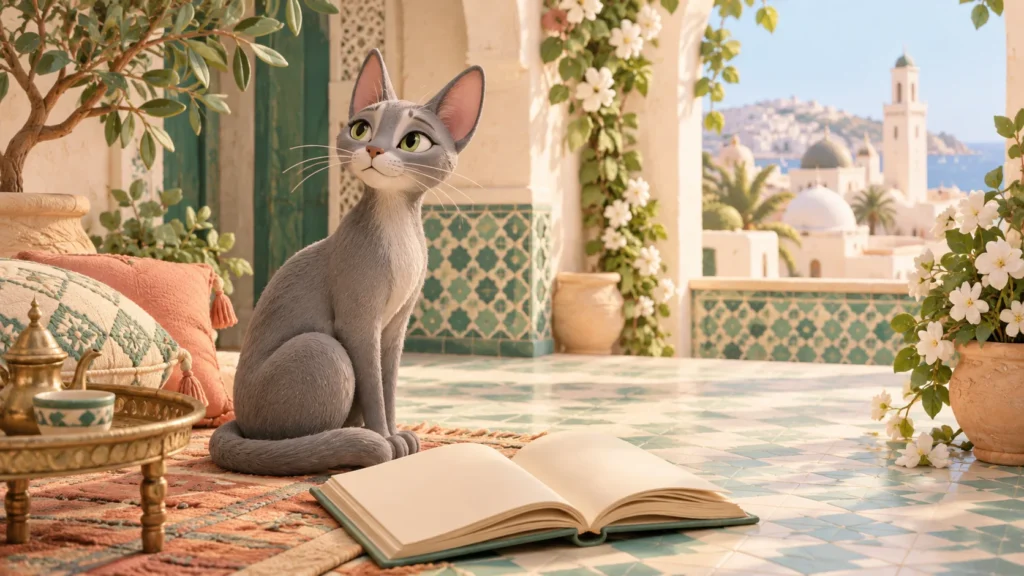
The cat eats the parrot. Then it starts talking. Its first response to this extraordinary new ability is to deny what it has just done.
Joann Sfar's The Rabbi's Cat makes speech troublesome from the outset. A talking animal can explain itself, but it can also evade, provoke and ask questions its household would rather not answer.
An argument begins at home
The first French volume, La Bar-Mitsva, introduces the cat of a rabbi in an early-twentieth-century Jewish community in Algiers. The animal is devoted to the rabbi's daughter, Zlabya.
Once it can speak, attempts to instruct it lead to questions about religious belonging and a demand for a bar mitzvah. The premise puts an unusually persistent outsider inside conversations whose assumptions the human participants already share.
The cat's reasoning is not automatically trustworthy. Its opening lie matters. Curiosity and self-interest can occupy the same small body.
Why a cat is such a useful questioner
A human guest may soften an awkward question to preserve the peace. A fictional cat can ask it directly, then return to worrying about comfort or affection.
That freedom gives Sfar a way to move between intellectual argument and domestic attachment. The animal has reasons to care about its household even while challenging the way its members think.
It also keeps the reader from treating every clever line as the author's final verdict. A character can be funny, persuasive and inconveniently partial at the same time. Following the conversation means noticing who wants what, as well as who appears to win a point.
The setting deserves attention
Algiers and the Jewish household are central to the book's world. Reducing the story to a generic joke about religion would lose the family relationships and cultural setting that make the arguments specific.
The comic form allows rooms, clothing and gestures to remain present while characters talk. An exchange can unfold amid ordinary life, with the cat's body continuing to remind us how strange the speaker is.
Sfar's angular feline drawing also resists the expectation that every cat protagonist should be a soft, reassuring mascot.
A talking animal can ask a socially awkward question without carrying exactly the same position as a human speaker. That gives the author freedom to interrupt an argument from an unexpected direction.
The reader still has to judge the question. A clever challenge may expose a contradiction, but it can also serve the questioner's appetite or convenience. Keeping those possibilities together makes the cat more interesting than a furry mouthpiece for a lesson. In a discussion of the book, try separating what the cat wants from what its argument appears to prove.
Start with the first conversation
The opening volume is a good entry because it establishes the change that makes all those conversations possible. It offers a different kind of feline literary presence from the observed animals in Colette and Doris Lessing's writing.
Here, the animal gets to object to the human explanation.
As you read, watch for the moments when argument gets close to attachment. The cat's ability to ask an awkward question is entertaining; its desire to remain near the people it loves gives those questions something to disturb.