 English
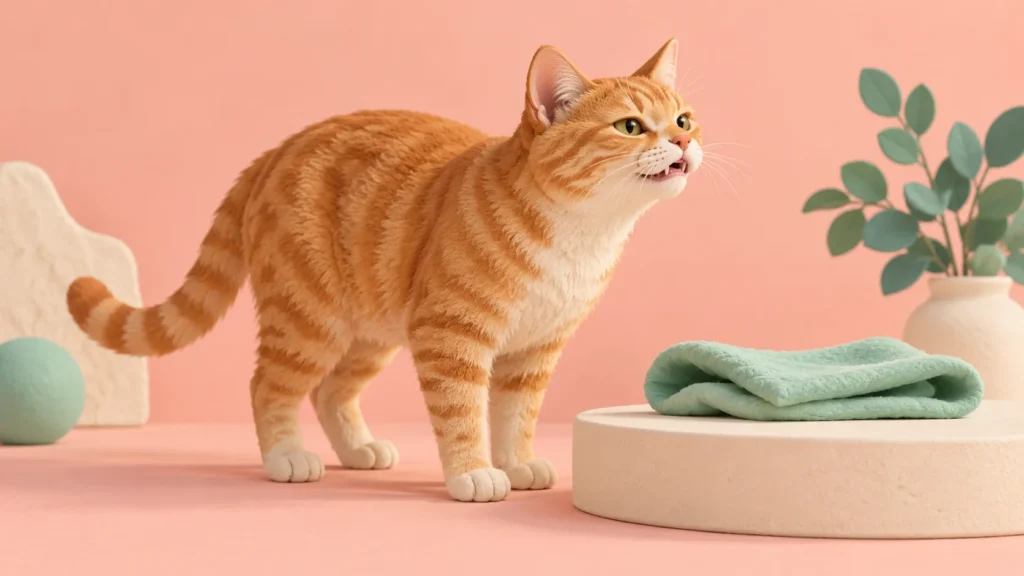
A cat investigates a shoe, pauses, and holds its mouth slightly open. The expression looks like someone has just delivered disappointing news. A moment later, the cat moves on.
That brief, curious pause can be the flehmen response. It belongs to the cat's investigation of scent, although the face it produces is considerably easier for us to notice than the information being collected.
A different way of investigating a smell
Cats Protection's behaviour guide describes flehmen as a way of collecting additional scent information through an organ in the roof of the mouth. The vomeronasal organ, also called Jacobson's organ, is part of the system animals use to investigate chemical signals.
A veterinary explanation from PetMD connects the response with smells such as pheromones, which can carry information about other animals. The familiar mouth movement helps the cat examine the stimulus. It does not mean the smell has offended it.
That is an easy mistake to make because a person's wrinkled nose or open mouth often announces disgust. Cats have no obligation to use the same facial vocabulary. Before deciding what an expression means, it helps to notice what happened immediately before it.
Watch the sequence
The useful observation is the sequence: investigation, a short pause with the mouth open, then ordinary activity. The cat may have been examining an object another animal used or a particularly interesting patch of its surroundings.
There is no need to manufacture an experiment. Holding something under a cat's nose removes its choice about distance and duration. A strong perfume, essential oil or household cleaner is not an appropriate scent sample. If you happen to see the response during normal exploration, letting the cat finish is enough.
You may also notice how much work happens before the conspicuous face. The animal approaches, stops, changes the position of its head and sniffs again. Flehmen is one visible moment in an investigation that began earlier.
Our article on catnip and silvervine follows another route through the feline chemical world. Those plant responses have their own mechanisms; a cat making the flehmen face has not necessarily encountered catnip or anything with a similar effect.
If you want to describe an episode to someone else, keep the sequence in your note: what the cat approached, whether it sniffed first, roughly how long the expression lasted and what happened next. 'Made a funny face' leaves out most of the relevant information.
A short video taken from a respectful distance can preserve that sequence better than a still photograph. It should capture ordinary behaviour, not a response you have deliberately provoked. If the episode worries you, the same context can help your veterinary team understand what you saw.
An open mouth can mean something else
Context becomes especially important when a cat is breathing through its mouth, appears distressed or keeps its mouth open rather than briefly investigating a smell. Those signs should not be waved away as flehmen. Breathing difficulty needs urgent veterinary attention.
For a healthy cat pausing after a sniff, however, the odd expression can simply be part of finding out more about its surroundings. You get the face. The cat gets the information. The shoe, unfortunately, offers no comment.