 English
Wanting a cat and knowing how to live as one are very different qualifications. Paul Gallico gives that gap a whole novel in Jennie.
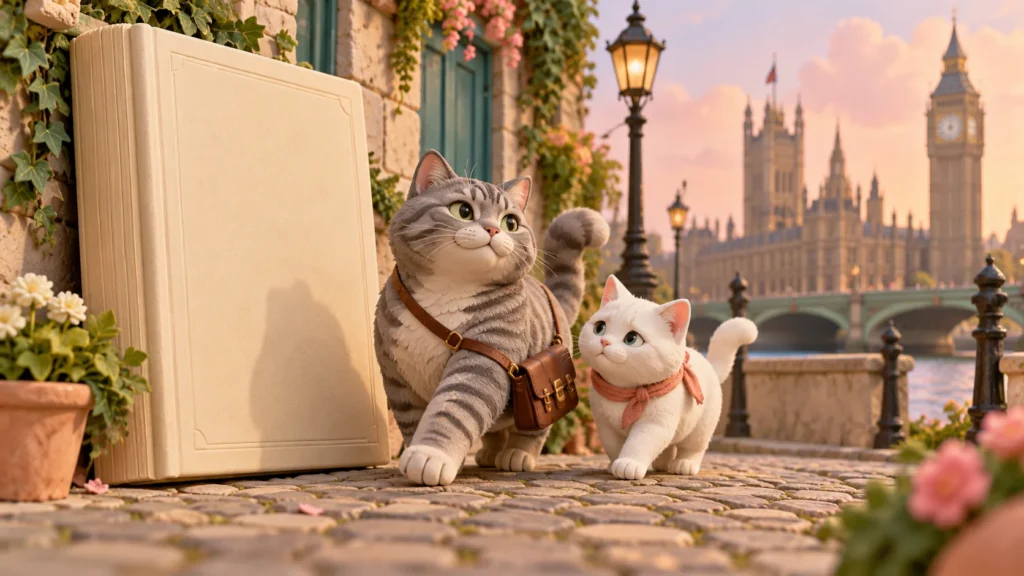
Peter Brown longs for a pet. After an accident, he wakes to find himself transformed into a cat. The new body arrives without instructions, and the person best equipped to help him is Jennie, a stray tabby who has already had to learn how to survive outside a comfortable home.
The expert is the stray
The publisher's description establishes the reversal clearly: Peter is injured while following a cat, then becomes dependent on the guidance of a cat who has been abandoned by her owners. The familiar division between a knowledgeable human and an animal needing help is turned around.
That is an effective starting point for an animal story. A reader can enter with Peter's ignorance. Questions that would be too obvious to ask in an ordinary adventure become necessary because he has the wrong experience for his circumstances.
Jennie's authority comes from living through those circumstances. She has knowledge Peter cannot acquire simply by being fond of cats. There is room for humour in his confusion, but the premise also makes companionship practical. Having a guide changes what he can do next.
A body changes the scale of a story
A human room and a cat's room occupy the same physical space, yet offer different routes through it. A threshold can become a place to hesitate. An object that a person ignores can become cover or an obstacle.
Gallico's transformation invites a reader to think about those differences. The interest lies in what has to be noticed after the change. If Peter retained every human advantage, becoming a cat would amount to putting a different costume on an ordinary child hero.
The publisher foregrounds the book's attention to feline behaviour. That makes a useful reading question: where does a scene ask Peter to learn something specifically feline, and where does it allow him the emotional familiarity of a human child? Looking for the movement between those positions is more rewarding than treating the novel as a literal account of what cats think.
Readers can also pay attention to scale. A room described from a child's height and the same room approached close to the floor offer different routes, hiding places and obstacles. That shift gives the transformation consequences beyond a new appearance, inviting the reader to reconsider a world that initially seemed familiar.
Affection with some uncertainty in it
The relationship also starts with unequal histories. Peter wanted a pet; Jennie has experienced the loss of a human home. The difference gives their friendship more to work with than mutual cuteness.
Readers who enjoyed our discussion of Colette and Doris Lessing's cat writing may recognise the value of paying attention to an animal without making it endlessly convenient. Jennie belongs to fantasy, but its opening places need, trust and knowledge inside the friendship.
There is no need to approach it as a test of scientific accuracy. Read it as a transformation story with a particularly good question at its centre: when the familiar world stops being familiar, who knows enough to help you through it? Peter is fortunate that the answer has whiskers.