 English
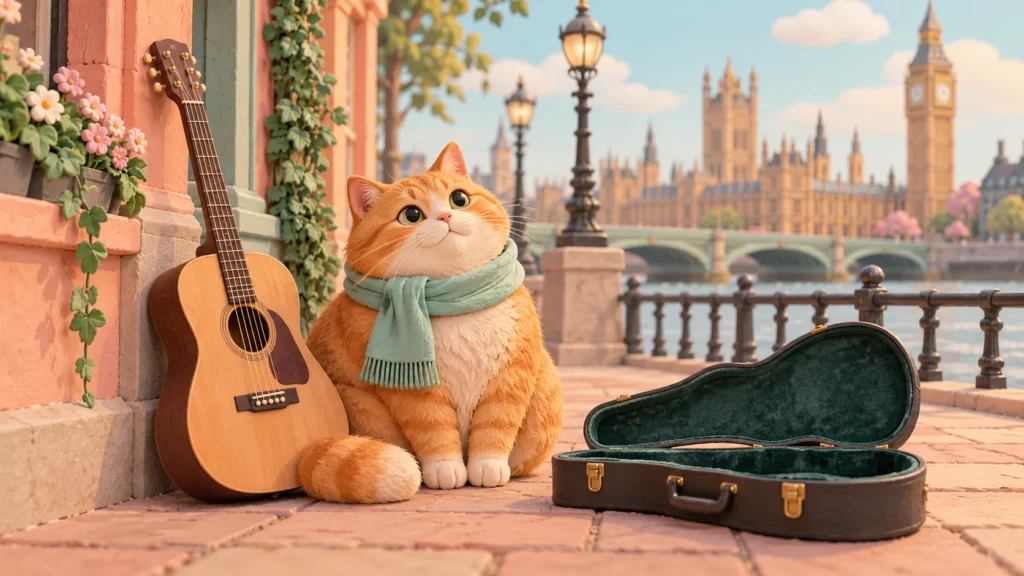
A busker, a guitar and a ginger cat make an immediately readable picture. You know where to look, and you probably want to know how the cat got there.
A Street Cat Named Bob builds its story around the friendship between James Bowen and the animal who became his companion. Released in Britain on 4 November 2016, the film is ten years old this month. The central attraction remains unusually straightforward: a relationship between two vulnerable lives sharing the same pavement.
From Bowen's book to a film
Sony Pictures' official production description identifies the film as an adaptation of Bowen's book, with Luke Treadaway playing James and Roger Spottiswoode directing. It describes a six-week London shoot, including Covent Garden, and credits Bob himself among the participants.
That last detail is a considerable part of the appeal. The audience is invited to recognise a real animal within a dramatised account. It creates a particular kind of attention: even when a scene follows a familiar cinematic shape, the cat's physical presence gives the viewer something immediate to watch.
The distinction between a life and its adaptation still matters. A film selects scenes, compresses events and needs a workable dramatic structure. It is a route into the story, not a complete record of everything that happened.
Responsibility has a daily rhythm
An animal companion gives a story recurring practical needs. Food must be obtained, a place to rest found, and signs of illness noticed. Those responsibilities continue while the human circumstances remain difficult.
That is a more useful way to think about the film than the comforting claim that a pet can simply cure addiction or end homelessness. Companionship can be important without becoming a replacement for treatment, housing or other forms of support. Turning recovery into an animal's miraculous achievement would leave too much of the human work out.
The premise also changes the way a viewer looks at public space. A pavement is somewhere people pass through, but it may also be someone's working environment or temporary place of safety. A cat can attract attention to a person whom passers-by might otherwise overlook.
For a conversation after the film, separate two questions. What does Bob change in the protagonist's daily routine? What difficulties remain beyond anything a cat can solve? Keeping both in view allows the companionship to matter without reducing a complicated life to a single uplifting image.
It also gives the human characters room to remain people, with obligations and choices that continue outside their relationship with the animal.
Watching the animal within the story
For cat lovers, part of the pleasure is watching how much interest an animal can generate without needing dialogue. A position beside a person, a change of attention or simple stillness can become the focus of a shot.
Our article on cats in The Aristocats considers a very different screen tradition, where animated animals perform with human voices and musical personalities. Bob brings the attraction back to a recognisable domestic animal in a human setting.
The film offers a warm entry point to Bowen's story, with difficult circumstances around that warmth. Its cat does not need to explain any of them. Being present is already enough to make the audience look more closely at the person beside him.