
 English
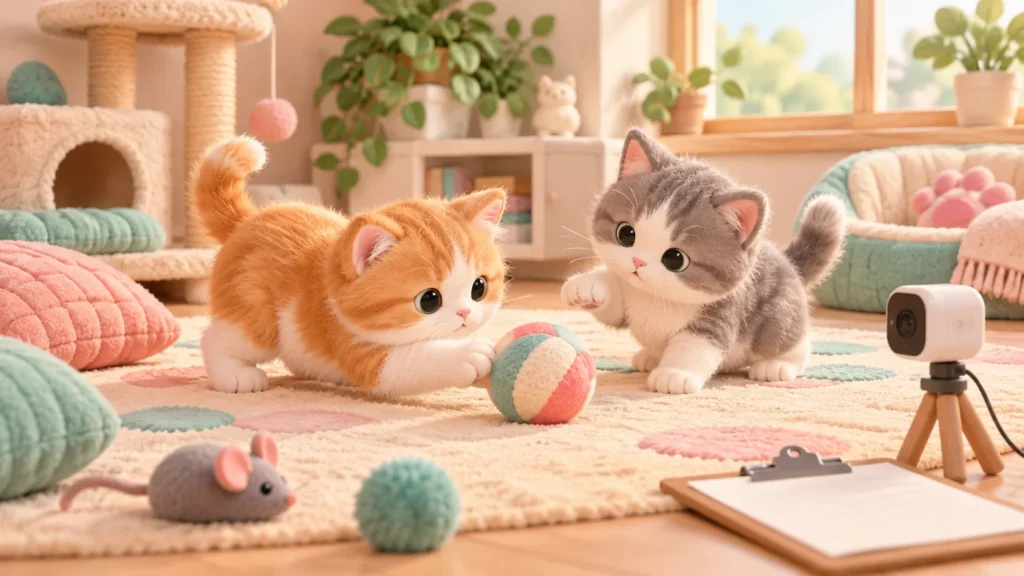
In a short cat clip, something usually has to happen immediately. A jump, a mistake or an improbable sleeping position supplies the reason to keep watching.
A foster-room stream can ask for a different kind of attention. The interest comes partly from returning to the same animals and noticing that they have changed.
The care comes before the camera
Kitten Academy's founders describe their work as fostering kittens and mother cats in partnership with shelters, then helping the kittens reach adoptive homes. Streams, shorter videos and photographs make that work visible to a wider audience.
The camera gives viewers continuity. A kitten that was unfamiliar yesterday becomes recognisable. Small differences in confidence or movement can matter because there is an earlier version to compare them with.
That can make the daily work around adoption easier to imagine. Feeding, cleaning and observation are less dramatic than a rescue headline, but they occupy much more of a caregiver's time.
A deliberate choice about tone
The project's No Sads policy explains an editorial decision to focus on the animals' lives in care rather than distressing accounts of what happened before they arrived.
The founders describe this as a boundary for themselves and their audience. They also explain that health concerns still receive attention and veterinary care.
That policy should be understood as a choice about presentation. It cannot make fostering predictable or remove the possibility of illness. It tells viewers what kind of public space the creators are trying to maintain.
Continuity changes the audience's role
A recurring viewer may learn the room and its routines as well as the kittens. There is pleasure in recognising a familiar sleeping spot or seeing an animal investigate somewhere new.
It resembles the long relationships readers once built with cat blogs, while adding the slower rhythm of a camera that does not need a punchline every few seconds.
That intimacy has limits. Viewers see what the camera and published updates show. They do not have the full medical or household context, so a brief unfamiliar moment is a poor basis for diagnosing an animal from afar.
A live camera also changes the viewer's patience. An edited clip usually begins close to its interesting moment. A continuous view may contain a long nap, an empty patch of floor or activity just outside the frame.
That can be part of the appeal, provided the limits remain clear. You are seeing one view of a working foster home, not supervising its care from a distance. An animal disappearing from the picture may simply have moved elsewhere. Use the project's own updates for explanations rather than turning a momentary absence into a story.
Start with the official updates
The Kitten Academy website links its news and channels. Check the date and description of a video before assuming it shows kittens currently available for adoption; archived footage and past introductions remain part of the collection.
For anyone interested in fostering locally, the useful next step is to ask a rescue organisation about its own requirements and support. Watching another household provides a glimpse, not the complete job description.
The quiet attraction of the format is that a kitten does not have to perform a remarkable trick. Growing, playing and becoming familiar can be enough to make people return.