
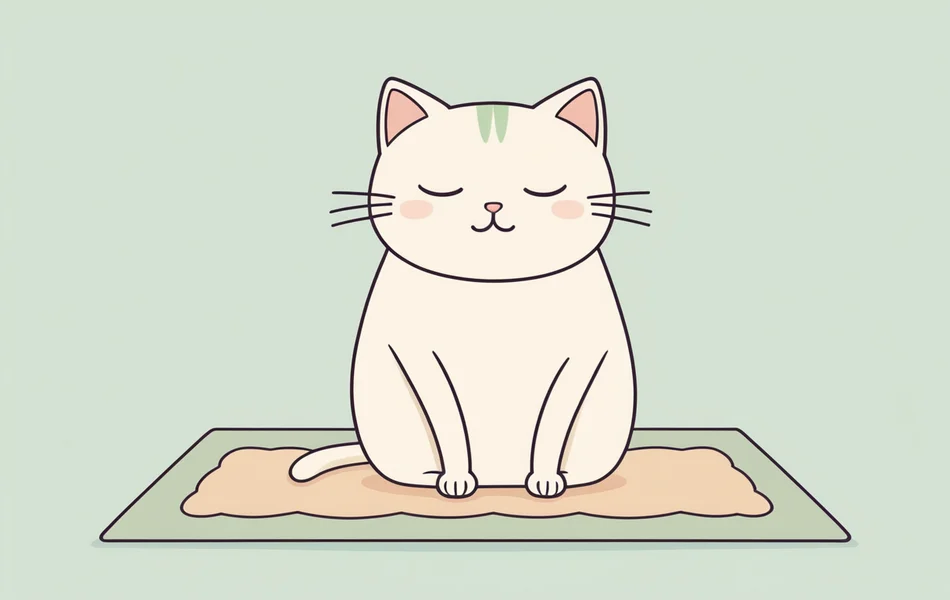
The internet has found a new activity to film: doing absolutely nothing. No phone, no podcast, no heroic productivity system. Just a person, a chair and enough silence to discover how loudly the fridge works. It is called rawdogging boredom, and the cat would like credit for the concept.
One widely shared example is creator Rowan’s challenge to sit without entertainment for an hour a day. The Daily Dot documented his videos in October 2025, including his own reports that he felt less compelled to use his phone. By May 2026, the label is still circulating in coverage of screen-free downtime.
An individual feeling better about their habits is interesting. It is not a clinical test showing that an hour in a recliner repairs attention. Fortunately, you do not need a medical breakthrough to appreciate the absurdity of watching someone else refuse to watch anything.
What rawdogging boredom actually means
The loose idea is to stop filling every spare moment with entertainment. Some people sit quietly; others describe a journey without the usual audio or scrolling. There is no standard protocol and no scientifically established timer hiding behind the name.
At its most theatrical, the challenge becomes an endurance event. An hour staring into space is less a wellness habit than a hostage situation you scheduled yourself. A short pause while the kettle boils is harder to package as a transformation story.
It overlaps with older ideas about rest and paying attention, but simply removing a phone is not the same thing as practising a particular meditation technique. The internet has mainly contributed branding. Calling a nap a recovery block was only the beginning.
What the 47-second statistic really measures
Psychologist Gloria Mark describes a striking change in her research: average time spent on a screen before switching fell from around two and a half minutes in 2004 to 75 seconds around 2012, and roughly 47 seconds in later studies. She explains the methods in an American Psychological Association interview.
The measurement concerns switching between screen activities. It is not the maximum time a human can concentrate, a diagnosis of every phone user, or proof that smartphones alone caused a population-wide loss of brain capacity. Someone changing from a document to email has switched screens; that observation does not tell us everything about why.
Still, the desire for fewer interruptions makes sense. We looked at a related design idea in Android’s Pause Point feature: a little friction before opening an app. The irony is excellent. Products spent years removing pauses, and now pauses are a feature.
A wandering mind can be useful, without being a reset button
The brain keeps working when you stop consuming content. Researchers associate the default network with internally directed thought, including remembering and imagining. It interacts with other systems; it is not a creativity switch that flips on the instant a screen goes dark.
There is evidence that an undemanding activity can help an idea develop. In a 2012 experiment, people improved on previously encountered creative problems after a simple task that encouraged mind-wandering. That condition did better than a demanding task, rest or no break.
The detail matters: the helpful condition involved doing something simple. It did not establish that staring at a wall for an hour is the best route to creativity, or that more boredom always means more benefit. Your next good idea is under no contractual obligation to arrive because you put the phone in a drawer.
And yes, there was an electric-shock experiment
In the much-discussed 2014 “Just think” research, participants generally found unstructured thinking periods less enjoyable than external activities. In one experiment, some administered a mild electric shock to themselves during the thinking period.
It is a memorable result about what happened in those conditions. It does not prove that humans are biologically built for exactly ten minutes of quiet but incapable of an hour. Nor does it establish a recommended daily dose of boredom. The headline practically writes itself; the prescription does not.
The attention economy sells the escape route too
The funniest part remains the distribution system. A screen-free challenge becomes a video, edited for a feed, watched between other videos. The platform can accommodate both your distraction and your inspirational plan to stop being distracted. It is an impressively flexible landlord.
Filming a quiet session does not automatically erase any benefit the person gets from it. But turning rest into a public performance adds another thing to monitor: how it looks, whether it worked, whether anyone noticed. At some point the break acquires a marketing department.
Meanwhile, a cat can sit on the carpet for ages without publishing a progress update. We do not know what is happening in that small furry head. Possibly deep contemplation; possibly a moth you have failed to notice. Either way, the absence of a personal brand is refreshing.
Try a pause, without making it another competition
If the idea appeals, leave a small gap in the day without immediately filling it. Sit for a few minutes, look out of the window or do an easy chore without adding a second activity. Treat it as an experiment in your routine, not a test of character or a guaranteed attention treatment.
You can change course if it feels unpleasant. Prolonged distress is not evidence that the exercise is working, and persistent concentration problems deserve more consideration than an internet dare. There is no prize for the longest encounter with a blank wall.
The version we like best needs no name, no app and no audience. A little unclaimed time. The cat has been demonstrating it for years. He would like you to know that it is not a wellness practice. It is just Tuesday.