The oldest living chicken recognized by Guinness is 15 years old, blind, lives in Maine, and prefers bebop. Specifically the fast stuff. Charlie Parker, if you must ask, which feels like a gag a cartoonist would pitch and be told to tone down because nobody will believe a hen with taste.
Her name is Gertie. She is a Golden Sebright bantam, the ornamental kind of chicken with laced feathers that looks like it wandered out of a Victorian oil painting. According to Guinness World Records, her record was verified in November 2025 at 15 years and 100 days, succeeding a Texan hen named Pearl. Her owner, Frank Turek, picked her up from a Maine post office on 27 July 2010 inside a cardboard box of peeping hatchlings. She turns 16 in July.
How a Chicken Became a Jazz Critic
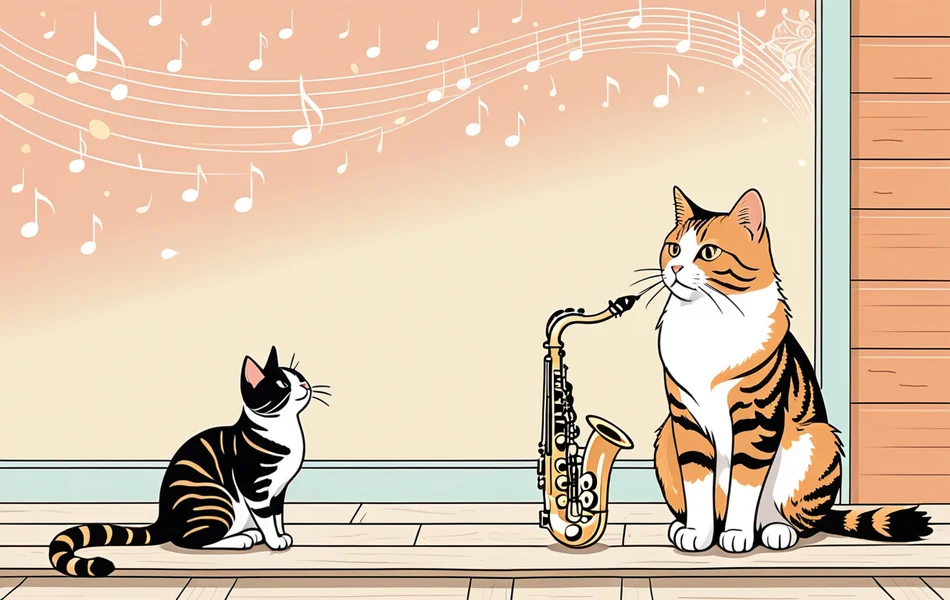
The jazz thing is not a stretch invented by a bored local news producer. Frank plays saxophone. He practices in the room next to wherever Gertie is set up. Over time he noticed that when he started running scales, she would cock her head back and forth like a tiny feathered metronome, and stop eating cracked corn long enough to listen.
The verdict, delivered in an April 17 NPR interview: “She seems to like bebop, like, the up-tempo, Charlie Parker-type songs.” Which is the kind of sentence that lands differently when you remember Charlie Parker’s nickname was Bird. A chicken. Who prefers Bird. You cannot write this. The universe wrote it for us, and all we have to do is witness it with the correct amount of humility.
We spend a lot of energy around here wondering why small animals do strange things, including why cats chirp at birds. Gertie’s musical taste is her owner’s interpretation of her behavior, rather than an experimentally established preference. That still leaves us with an excellent image: a feathered jazz critic politely waiting for the saxophone solo.
The Real Story Is How Unusual 15 Years Actually Is
Fifteen years is an impressive age for a chicken, but oldest living and oldest ever are different records. Guinness lists Muffy at 23 years and 152 days. Gertie still has quite a few birthdays to go before challenging that mark. There is time for a substantial expansion of the record collection.
Frank’s account centers on attentive care and adapting to Gertie’s needs. After younger hens injured her on Christmas Day 2024, he moved her indoors. Her adjustment to blindness is part of what makes the story remarkable. The practical lesson is paying attention to the individual bird, rather than treating one unusually long life as a universal recipe.
She Crows Like a Rooster, Because Nature Is Weird
Frank says Gertie also started crowing years ago. That gives her another talent beyond surviving and judging saxophone practice. The reason for her crowing remains unexplained in his account. The chicken is allowed to remain more complicated than the headline.
Frank describes Gertie as clever and perky. She answers to her name with a small “pup, pup, pup” sound. She puffs into a feathered tennis ball when she sleeps, and she cuddles in the crook of Frank’s arm while he watches television. None of this is behavior most people associate with poultry, which is part of the quiet lesson buried in the story. We decide what an animal is allowed to be based on what category we put it in. Gertie’s category is dinner for most of the planet. Frank put her in a different one, and it turns out she was a jazz critic all along.
Why This Story Is Bigger Than It Looks
Part of the appeal is simply getting to know an animal most of us would otherwise pass over. A name, a familiar voice, a favorite place to rest: the details make an individual visible where we might normally see only a category.
A chicken with an owner-reported fondness for bebop is a pleasant challenge to that habit. Gertie does not have to represent a whole cultural movement. Being an elderly hen with a devoted human and a saxophone in the next room is plenty.
One More Weird Coincidence
Here is the coincidence that makes the whole thing hard to improve upon: Charlie Parker was known as Bird. Stories about the origin of that nickname vary, but we do not need to settle them to enjoy a hen apparently taking an interest in his music.
So an exceptionally old living chicken apparently prefers Bird. The loop closes. The universe is funnier than anyone gives it credit for, and the coincidence has exactly the shape of a good jazz solo: it starts somewhere normal, takes three unpredictable turns, and ends in a place that makes retroactive sense.
Gertie has an attentive owner and an unusually long life behind her. Catching Muffy remains a distant possibility, not a prognosis. If she makes it, the story will still be mostly about a man and a bird and a saxophone, which is what every good jazz story is about anyway. The news has been almost universally miserable for jazz fans lately, what with the AI-generated fake jazz artists squatting on real Spotify profiles, so take this win where you can. A real bird. A real saxophone. A real 15-year-old head, bobbing along, keeping time.