The history of internet memes is the history of strangers learning to recognize the same increasingly broken sentence. A dancing baby, a cat requesting a cheeseburger, a song hiding behind an innocent link: the material changes, but the invitation stays familiar. You get the reference. Now do something with it.
This is a tour of overlapping eras, not a claim that the whole internet changed formats on the same Tuesday. Old jokes survive beside new ones. Somewhere, even now, somebody is discovering a Rickroll for the first time, and somebody else is preparing to explain that it was better in 2007.
Table of Contents
- A Word from a Biology Book
- Before the Internet
- The 1990s: Babies and Hampsters
- Forums, Image Macros, and Cats
- The Social Media Era
- Sounds, TikTok, and Brainrot
- Why Meme History Matters
- Frequently Asked Questions
A Word from a Biology Book
Richard Dawkins introduced “meme” in his 1976 book The Selfish Gene, using it for cultural transmission rather than captioned cat pictures. Tunes, ideas, and habits could spread between people. The internet would later give that word a much more specific everyday life.
One early discussion of the online version is Mike Godwin’s 1994 WIRED essay, “Meme, Counter-meme”. Godwin wrote about ideas circulating in online discussions and his attempt to counter habitual Nazi comparisons. The connection between memes and internet arguments was there long before social media added engagement dashboards.
The broader cultural concept and the everyday internet meaning still coexist. For this guide, an internet meme is a recognizable pattern people repeat, adapt, or use in new contexts. It might be an image, a phrase, a gesture, a sound, or a combination. Bold white text is optional. The cat is strongly encouraged.
Before the Internet
People did not need a share button to pass a joke around. Chain letters, copied cartoons, and recurring graffiti offered earlier ways for an idea to move beyond its first setting.
The US National Park Service describes “Kilroy was here” as a popular piece of graffiti among American troops during World War II: a name, a face peering over a wall, and the suggestion that somebody had already reached this spot.
Calling it a proto-meme is a comparison, not a claim that wartime graffiti was secretly a website. It helps show the continuity: recognition itself can be part of the joke. You have seen this before, but finding it here makes it funny again.
The 1990s: Babies and Hampsters
The Dancing Baby became one of the web’s memorable early animated oddities in 1996. Its creators’ account traces it to a Character Studio demonstration. A software sample escaped into popular culture, which is a more eventful career than most sample files get.
It is often described as the first internet meme, but that depends on where you draw the boundary. Text jokes, image exchanges, and other shared online material did not wait for the baby. “Famous early example” is a better description than an uncontested starting gun.
Then came the deliberately misspelled Hampster Dance. Deidre LaCarte’s 1998 page turned looping little rodents and a relentlessly catchy soundtrack into a destination people sent one another. Contemporary reporting interviewed LaCarte as the site grew into merchandise and attention. The hamsters had a commercial department surprisingly quickly.
These examples feel like artifacts of a smaller web: a particular page, a particular file, a link passed along. But it would be wrong to imagine a decade without remixing. Copying, modifying, and making variations were already part of the fun. The tools and distribution routes were different, not the human capacity to improve a joke by making it worse.
Forums, Image Macros, and Cats
Forums and imageboards made exchanges more visible within communities. A picture could acquire captions, return in another thread, and become a template whose rules regulars understood.
4chan was one influential venue, alongside many others. Its own FAQ dates Christopher Poole’s founding role to October 2003 and identifies Futaba Channel as the inspiration. It was not simply an English copy of the textboard 2channel, a distinction easy to lose in compressed histories.
Image macros made the template obvious: a familiar face or scene with words that changed the situation. Advice Animals and rage comics offered recognizable characters and reactions. You could join a joke by learning the format instead of inventing its visual language from scratch.
The LOLcat Empire
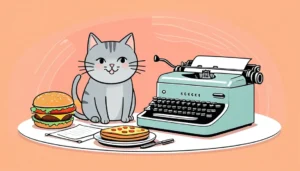
I Can Has Cheezburger launched in 2007 through Eric Nakagawa and Kari Unebasami. WIRED’s account of the site’s growth places it within an existing culture of funny animal pictures. The site helped popularize LOLcats; it did not single-handedly invent putting words in a cat’s mouth.
The appeal was beautifully practical. A cat could look offended, victorious, baffled, or suspiciously managerial. Add a caption and it became a character. The intentionally bent grammar of LOLspeak made that character sound like it belonged to the same ridiculous world as the others.
Anyone who thinks cats were merely passengers in internet history should inspect the management structure of this website.
The Link Becomes the Joke
Rickrolling shows why memes need not be image templates. The trick is the switch: a link promises one thing and produces Rick Astley’s “Never Gonna Give You Up.” Know Your Meme documents its 2007 spread and subsequent appearances beyond the original online setting.
The video itself can remain unchanged while the setup changes completely. The joke lives partly in the expectation you brought to the click.
The Social Media Era
Facebook, Twitter, Tumblr, Instagram, and other services gave circulating jokes more routes between communities. They did not open an internet that had previously been closed, but they made encounters between different audiences a central part of the experience.
That creates a familiar life cycle: a small group understands a format, a larger group discovers it, a brand joins in, and the first group declares it dead. The declaration is frequently premature. A joke can be exhausted in one feed and new in another.
Short video also mattered before TikTok. Twitter’s January 2013 introduction of Vine emphasized videos of six seconds or less. A repeating clip could make timing, delivery, and a tiny scene into something people recognized and reused.
When Context Changes the Meaning
Memes can carry warmth, satire, hostility, or propaganda. A format does not become harmless just because it is funny to the person posting it.
Pepe the Frog is a well-known example. The ADL explains that the character did not start with racist or antisemitic meaning, and that many uses remain non-bigoted. Its documentation of hateful adaptations makes context essential, not irrelevant. Seeing the frog alone is not enough to understand every post.
There was never a single year when memes suddenly became political. Nor did irony begin with the “dank” era. Later formats often played with older ones, but joking about a joke is an old sport.
Sounds, TikTok, and Brainrot
In August 2018, musical.ly and TikTok announced a unified app under the TikTok name. That was a merger milestone, not the birth of every form of short video or audio remixing.
A shared sound can supply the structure for many different clips. The person changes, the setting changes, but the pause or punchline tells you which game is being played. Images and text do not disappear; they mix with performance, editing, captions, and audio.
It is tempting to turn this into a simple story of ever-shorter attention spans. Actual trends are less tidy. Some flare briefly; others return after months or years. Comparing a hashtag’s total views with one old video’s views will not give you a clean measure of how much faster culture has become.
Brainrot Is Older Than Your Feed
Oxford selected “brain rot” as its 2024 Word of the Year, while tracing the expression back to Thoreau in 1854. Online use can be joking or self-deprecating; the phrase is not a medical diagnosis produced by watching one absurd clip.
Nor is all brainrot AI-generated. AI imagery is part of some prominent formats, including Italian Brainrot, but the label is much broader. A deliberately silly human-made joke can qualify perfectly well. The machines do not own nonsense.
By April 2026, the Italian Brainrot sticker-album story shows a format crossing back into physical collecting, while the 7×7=49 trend demonstrates how a recognizable association can carry a joke without an elaborate plot. One belongs in an album; the other makes a multiplication table unexpectedly sociable.
Why Meme History Matters
A meme can do social work with very little material. It can say “I recognize that feeling,” invite someone into a group, or make someone feel unwelcome. Understanding the reference is sometimes part of belonging.
The history is therefore about more than a sequence of popular pictures. It is about who can make a version, where that version travels, and what an audience thinks it means. The same technical ease that helps a joke spread can help a false claim spread too.
There is also pleasure in keeping the record straight. A remembered internet is not necessarily the internet everyone else experienced. Your golden age may be another person’s incomprehensible folder of badly compressed frogs.
Frequently Asked Questions
What was the first internet meme?
There is no universally useful single answer. Dancing Baby is a famous 1990s example, but earlier online jokes and shared material complicate any claim of absolute priority.
Who coined “meme”?
Richard Dawkins, in The Selfish Gene in 1976. The original concept was broader than today’s everyday internet use.
Is a viral video automatically a meme?
Not necessarily. Virality describes circulation; a meme involves recognizable repetition or adaptation. A video can become material for a meme, and both descriptions can apply at once.
Does adding a funny caption remove copyright?
No. In the United States, the Copyright Office explains fair use as a case-specific assessment. Noncommercial use is not an automatic exemption. Applicable rules differ between jurisdictions; a meme label does not supply permission by itself.
Why do cats keep coming back?
They give us faces and situations we can turn into little characters. More importantly, the management insists that any history of internet culture leave adequate space for cats. We have been unable to negotiate that clause.