Daniel Park has turned a collection of little bears into a very large achievement. Guinness World Records lists 3,482 Bearbrick figures for BrickChicago, his collecting identity, with the record achieved in Palatine, Illinois, on March 4, 2026.
That is a lot of bears. It is also a shelving problem of impressive ambition. Somewhere, a person who thought one display cabinet would be enough has just felt understood.
One Bear Shape, Many Possibilities
Bearbrick—styled BE@RBRICK—is Medicom Toy’s bear-shaped collectible. Its recognisable outline is the point: the decoration changes while the basic form provides a common language.
The scale labels can look mysterious if you are new to the hobby. Medicom’s listing for a maneki-neko pair, announced for December 2025, gives heights of about 70 mm for the 100% figure and 280 mm for the 400% version. In this context, percentages describe size, not how committed you are to bears.
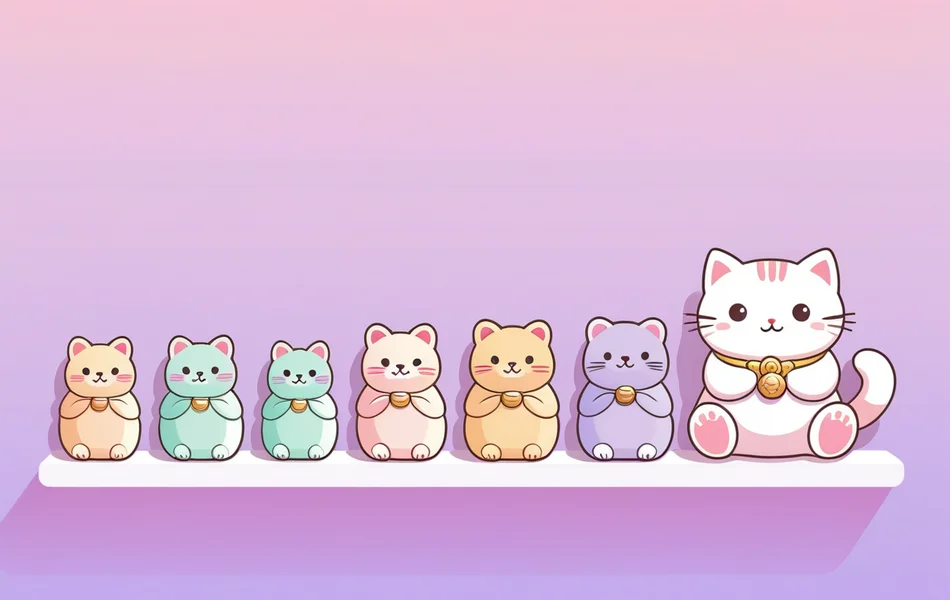
It is an appealing design constraint. Two figures can have the same outline and feel completely different because of colour, imagery or a familiar character. Seen together, the repeated shape makes those differences easier to notice.
You do not have to want thousands of them to understand that part. A row of variations asks a simple question: what else can this one form become?
A Question From His Daughter
In its May 6 account, Guinness says Park began with a blind box about five years earlier. It reports that his eight-year-old daughter asked about the collection record while they were looking through a Guinness book together, inspiring him to pursue the title.
The previous record cited in that report was Gao Ke’s 1,008 figures in 2020. Park’s collection is more than three times that count. Guinness also describes designs linked to artists including Basquiat, Warhol and Haring, alongside pop-culture characters and a Japanese beckoning cat.
The family detail is what gives the number some warmth. A record can look abstract from the outside; a child asking a question makes the ambition easier to picture. It turns “there are quite a few things in this room” into a project with an answer.
And a small, specific interest is allowed to matter. It does not need to become a business plan before it earns a place in someone’s life.
The Bear-Shaped Cat Has Our Attention
Yes, the maneki-neko Bearbrick is real. Medicom’s own catalogue shows the beckoning-cat motif translated into the bear format. This is excellent news for anyone who feels that species boundaries have been holding desk ornaments back.
Structurally a bear, visually a cat: an identity crisis with very good presentation. The familiar lucky-cat decoration makes sense at a glance, even though the underlying silhouette has wandered in from another department.
Pudgy Cat’s entirely biased position is that this deserves special attention. The art collaborations can have their serious discussion. We will be over here admiring the bear that has successfully applied for a feline position.
It also neatly illustrates the appeal of the format. The base shape does not disappear; the pleasure comes from seeing another idea fit around it.
A Record Count Is Not a Price Tag
The 3,482 figure belongs to the verified record, not a promise about what every piece is worth. A collection’s size, a collector’s enjoyment and an object’s resale price are separate things.
Nor should one spectacular sale be treated as a price guide for an entire hobby. If someone likes a figure enough to display it, that is already a reason to enjoy it. A future buyer is not required to validate the purchase.
The same applies to the count itself: it records an achievement on a date. It does not tell us how many figures will be on the shelves next year, or guarantee that nobody else will challenge the title.
A Hobby Does Not Need to Explain Everything
There is a tempting bigger story here about rediscovering physical objects. We have explored a different version of that appeal in the cassette comeback. But one impressive collection is not proof that everyone has abandoned their screens.
It can simply be a good story about someone enjoying a particular thing enough to make room for a remarkable amount of it.
Even if the thing is plastic bears. Especially if one of the bears is making a convincing case for being a cat.