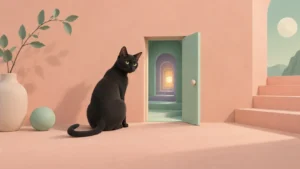

An unreliable narrator is a storyteller you cannot fully trust, and that distrust is the entire point. The author plants clues, contradictions, omissions, or open lies inside the narration so that readers slowly realize the version of events they are reading is bent. The technique is older than the novel itself, and writers from Agatha Christie to Vladimir Nabokov to Gillian Flynn have used it to turn books into puzzles. If you have ever finished a story and immediately wanted to flip back to page one because the ending changed everything, you have probably met an unreliable narrator. The cat has met several, and the cat is still suspicious of Humbert Humbert.
Table of Contents
- What Is an Unreliable Narrator
- A Short History of the Unreliable Narrator
- The Main Types of Unreliable Narrators
- How to Spot an Unreliable Narrator
- Famous Unreliable Narrator Examples in Literature
- Unreliable Narrators on Film and TV
- Why Writers Use Unreliable Narrators
- How to Read a Book With an Unreliable Narrator
- FAQ
What Is an Unreliable Narrator
Wayne C. Booth introduced the influential term in The Rhetoric of Fiction (1961). His account concerns the gap between a narrator and the norms of the implied author: the authorial position readers infer from the work, not simply the real writer’s personal opinions. The Living Handbook of Narratology surveys this idea and later approaches. In plain English, the story gives you reasons to question the voice telling it.
Unreliability can involve false reporting, mistaken interpretation, or judgments the work invites us to reject. A narrator might describe an event accurately and misunderstand its significance. The useful question is where the story opens a gap between what the narrator says and what the reader can infer. A narrator claiming that no gardener exists while holding a suspiciously muddy spade would certainly deserve a second look.
Every storyteller selects and omits, but a limited point of view is not automatically an unreliable one. A narrator can honestly tell you what they know and acknowledge what they do not. The literary device becomes especially interesting when the work encourages you to read beyond, or against, that account.
A Short History of the Unreliable Narrator
The unreliable narrator is much older than Booth’s 1961 label. You can find early ancestors in classical satire, where the speaking voice is openly ridiculous, and in confessional medieval literature, where the narrator’s piety is doing some heavy lifting.
By the 18th century the device was on the move. Tristram Shandy by Laurence Sterne (1759-1767) gave readers a narrator who could not stay on topic for three sentences, derailing his own autobiography for nine volumes. In the 19th century, Edgar Allan Poe built short stories like The Tell-Tale Heart and The Cask of Amontillado around disturbing first-person accounts: one insists on his sanity, while the other coolly recounts an elaborate revenge.
The 20th century turned the unreliable narrator into a centerpiece. Ford Madox Ford’s The Good Soldier (1915) opens with the famously suspicious line “This is the saddest story I have ever heard,” then proceeds to demonstrate that the narrator does not actually understand the story he is telling. Agatha Christie shocked the mystery genre in 1926 with The Murder of Roger Ackroyd, a book whose twist became a textbook example. Vladimir Nabokov pushed the technique into morally horrifying territory with Lolita in 1955, daring readers to notice how prettily the prose was lying to them.
The Modern Boom
Late-twentieth-century and contemporary fiction supplies plenty more examples: Fight Club (1996), We Need to Talk About Kevin, The Sense of an Ending, Gone Girl, and The Girl on the Train. The technique suits psychological suspense, but it can also produce a quiet, painful reassessment rather than a spectacular final twist.
The Main Types of Unreliable Narrators
Critics use different classifications. Riggan’s character types and Phelan’s distinctions between kinds of reporting, interpretation, and evaluation are not a single shared five-part checklist. The headings below are practical reading prompts, and a narrator can fit more than one.
The Liar
The deliberate deceiver knows something and shapes the account to conceal or distort it. This can mean an outright falsehood or a carefully placed omission. Light spoilers ahead: even identifying a particular book’s narrator as unreliable can give away part of its surprise. The examples that follow discuss narrative methods without spelling out every ending.
Unstable Perception
A story may make perception, memory, or the border between imagination and events uncertain. Poe’s The Tell-Tale Heart is a classic example of a voice whose confident account invites doubt. Read the particular evidence in the fiction; having a mental-health condition does not, in itself, make a real person untrustworthy.
The Inexperienced Observer
A character can report honestly while missing implications that a reader notices. Age, experience, and access to information may all matter. Be careful with familiar examples: Scout’s childhood viewpoint in To Kill a Mockingbird is framed by retrospective narration. And Christopher in The Curious Incident of the Dog in the Night-Time is not simply a liar because he interprets social situations differently. A 2024 study of Haddon’s novel explores the tension between truthful reporting and incomplete understanding.
The Performer and Boaster
Some voices embellish, boast, or perform a version of themselves for an audience. Their pleasure in telling the story can outrun their interest in accuracy. Rather than force every famous narrator into a fixed box, ask what this particular voice gains from making the story bigger, funnier, or more flattering.
The Biased Witness
The narrator has a stake in how the story comes out and may protect a cherished self-image. Stevens in Kazuo Ishiguro’s The Remains of the Day is a rich example. His recollections of service, dignity, and missed opportunities invite readers to notice more than he readily admits. The Booker Prizes reading guide offers questions for exploring that distance between his account and our response.
How to Spot an Unreliable Narrator
Writers can plant contradictions, omissions, and tensions that invite readers to question the account. Some arrange a sharp reveal; others leave the uncertainty unresolved. These are possible clues, not a mechanical test:
- Direct contradictions. The narrator says one thing on page 14 and the opposite on page 110, with no explanation. If a character is dead, alive, and dead again, something is up.
- Gaps and skips. The narrator refuses to describe certain events, fast-forwards over crucial moments, or insists “you do not need to know what happened next.” That is exactly what you need to know.
- Other characters disagree. Side characters react to the narrator with confusion, fear, or pity that does not match the narrator’s self-image.
- Overinsistence. The narrator keeps telling you they are calm, sane, honest, in control. In a story, repeated insistence can draw attention to a gap between a claim and the events being described.
- Strange tone shifts. The voice gets too clinical during emotional events, too sentimental during banal ones, or breaks into a different register without warning.
- Time slippage. The chronology stops adding up. Months go missing. The narrator is suddenly older or younger than the previous chapter implied.
- Suspicious sources. The narrator says they “heard” or “remember” things they could not possibly have witnessed.
Look for a pattern supported by the text. A contradiction might be deliberate, but a narrator changing their mind or a nonlinear chronology is not automatically a trick. There is no magic number of clues. The cat still recommends a sticky note, mostly because sticky notes are satisfying to sit on.
Famous Unreliable Narrator Examples in Literature
A quick tour of some familiar examples. The descriptions concern the way each book is told, but readers who want no hints at all may prefer to skip this section until afterward.
- Lolita by Vladimir Nabokov (1955). Humbert Humbert narrates his own crimes in beautiful prose designed to seduce the reader into sympathy. The technique is the moral horror of the book.
- The Remains of the Day by Kazuo Ishiguro (1989). Stevens narrates a road trip through his memories and edits out everything that would force him to face what his life cost him.
- Fight Club by Chuck Palahniuk (1996). The reveal recontextualizes every previous chapter. Standard issue twist unreliable narration.
- We Need to Talk About Kevin by Lionel Shriver (2003). Eva writes letters to her husband and the reader is invited to decide how much of her account of her son is honest and how much is self-justification.
- The Sense of an Ending by Julian Barnes (2011). Memory itself is the unreliable narrator. The protagonist is sincerely trying to tell the truth and getting it wrong anyway.
- Gone Girl by Gillian Flynn (2012). Two narrators, both unreliable, in completely different ways. A masterclass in alternating-POV deception.
- The Girl on the Train by Paula Hawkins (2015). A narrator with alcoholic blackouts, watching a neighbor through a train window. Gaps in memory complicate what can be reconstructed, while other people’s accounts also need scrutiny.
For literary techniques that bend reality in a different direction, our explainer on magical realism versus surrealism covers two genres that play their own games with what counts as real inside a story.
Unreliable Narrators on Film and TV
On screen, a voiceover can conflict with an image, a recollection can be replayed differently, or a camera can restrict us to one character’s understanding. The Usual Suspects, Memento, Shutter Island, American Psycho, and Mr. Robot offer different ways of making an account or perspective uncertain. A misleading image is not always a character narrator lying; film has several ways to control what we know.
Television can spread those uncertainties across episodes and viewpoints. A later installment may complicate an earlier version without replacing it with one final, unquestionable truth. The screen is not a newcomer struggling to catch up with fiction: sound, editing, performance, and framing give it its own ways to create doubt.
Why Writers Use Unreliable Narrators
The unreliable narrator is not a gimmick, even when it is used as one. Writers reach for it because it does specific work that no other technique does as well.
First, it forces active reading. The reader cannot coast on the narrator’s authority. Every sentence is potentially evidence. That changes the experience from passive consumption to forensic investigation, and a lot of readers love that.
Second, it lets the writer dramatize subjectivity. People can interpret memories through a changing self-image. A writer can dramatize that tension without turning every personal recollection into a lie.
Third, it builds twist endings without cheating. In a puzzle built around a reveal, earlier clues can make the surprise feel earned. The reveal is not a rabbit pulled from a hat. It is a rabbit that was sitting on the table the whole time, dressed as a teapot.
Fourth, it controls sympathy. Writers can use unreliable narration to make us care about people we should not care about, or to make us doubt people we should trust. That makes the distance between understanding someone and endorsing their judgment part of the reading experience.
How to Read a Book With an Unreliable Narrator
Once you know the narrator might be lying, your job changes. You are still reading for pleasure, but you are also collecting evidence. A few practical reading habits make the experience richer.
- Pay attention to what other characters do, not just what the narrator says about them. Then consider whether the reported actions themselves deserve trust.
- Notice what the narrator avoids. Topics they skip, people they refuse to describe, time periods that vanish.
- Track the emotional temperature. If the prose stays calm during a scene that should be devastating, ask why.
- Listen for justifications. Long explanations of why something was fine usually mean it was not.
- Reread the opening after you finish. An opening can take on a different meaning once you know where the story goes.
If you want to retain the patterns you spot across multiple books, our guide on how to remember what you read offers practical ways to keep track of useful ideas. For a deep dive into a genre where unreliable perception is structural, see our piece on what weird fiction actually is.
FAQ
Is every first-person narrator unreliable?
No. A first-person account is limited, but limitation and unreliability are different. Look for reasons within the work to question the reporting or interpretation rather than treating the pronoun “I” as an automatic warning label.
Can a third-person narrator be unreliable?
Yes, though readers and critics may disagree about whether a passage involves an unreliable narrator or a restricted character perspective. Atonement is a useful, spoiler-sensitive example of a novel playing with narrative authority. The Secret History, by contrast, is narrated in the first person by Richard Papen and should not be listed as a straightforward third-person example. The publisher’s reading guide invites discussion of how his perspective shapes the account.
Who invented the unreliable narrator?
Nobody invented it because nobody owns it. The label was coined by Wayne C. Booth in 1961, but the technique itself is much older. Ancient satire, medieval confession, and 18th century novels all use forms of it. Booth gave critics a clean term to describe what writers had been doing for centuries.
What is the difference between an unreliable narrator and a plot twist?
A plot twist is a reveal that recontextualizes events. An unreliable narrator is a technique that may or may not produce a twist. Plenty of unreliable narration is quiet and ambient, with no big reveal at all. The Remains of the Day, for example, builds much of its force through a gradual reassessment of Stevens’s memories and choices.
How do I start using an unreliable narrator in my own writing?
Start with the gap. Decide what the narrator believes about themselves and what the reader is going to figure out. Then plant your evidence early and often. The cardinal rule is that the reveal should feel inevitable in retrospect. If readers feel cheated, the technique has failed. If they immediately want to reread, it has worked.
Conclusion
An unreliable narrator can turn reading into detective work, or simply make a familiar sentence hurt more the second time. The voice may deceive, misunderstand, embellish, or protect itself. Our job is to notice what the story lets us see around it. Pick up Lolita, The Remains of the Day, or Gone Girl, and pay attention to the gap between telling and understanding. The cat suggests starting with a coffee. It is going to be a long evening.