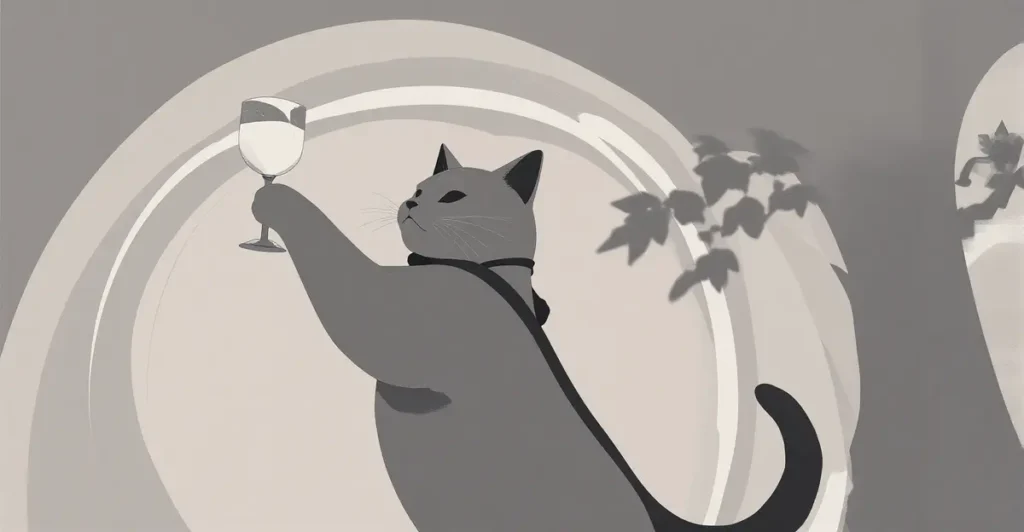
Why do we clink glasses when we toast? You have done it at weddings, at New Year, and at birthday dinners where someone made a speech. The clink feels almost like a reflex, yet nobody at the table ever explains it. The honest answer is that its exact origin is uncertain. We can document old drinking rituals, trace the word toast, and explain the ringing sound. Connecting all three into one tidy invention story is harder. Naturally, your uncle has already solved the mystery and is about to tell you it involved poison.
Table of Contents
- The Poison Story, and Its Missing Evidence
- Drinking Rituals Before the Clink
- The Fifth Sense Theory
- Where the Word “Toast” Comes From
- The Real Rules of Clinking
- How the World Toasts Differently
- Why Do We Clink Glasses? The Acoustics
- Frequently Asked Questions
The Poison Story, and Its Missing Evidence
Here is the story almost everyone believes. In medieval times, poisoning a rival was a popular career move, so when two people drank together they would slam their cups against each other hard enough to slosh wine from one vessel into the other. If your host had spiked your drink, he would now be drinking his own poison, so the clink was a built-in safety check. Romantic, paranoid, and completely unverified.
The difficulty is the missing historical bridge: a memorable scenario is not a record of how the custom began. Ripley’s discussion of the poisoning story treats it as an urban myth. It is safest to present it as an unverified origin tale, rather than claim that medieval diners had a standardized drink-swapping security protocol. The fact that poisoning existed does not establish why people began touching cups.
This pattern (a tidy origin story that turns out to be invented later) shows up everywhere in cultural history. It is the same energy that builds internet mythologies out of thin air, the way an empty image spawned an entire legend in our explainer on the Backrooms. Humans hate gestures without reasons, so we manufacture reasons. The poison myth is one of those manufactured reasons, and it is worth dropping at your next dinner party right before someone else repeats it.
Drinking Rituals Before the Clink
Ancient drinking rituals are much better documented than the origin of the clink itself. A Greek libation bowl in the Metropolitan Museum’s collection dates to the late sixth century BCE. The museum explains how such bowls were used to pour offerings to the gods at drinking parties. Wine could mark a relationship with the divine as well as an evening with other people.
That establishes an old connection between drinking and ceremony. It does not give us an uninterrupted timeline from a Greek offering to two champagne flutes touching at a wedding. Raising a cup, drinking to someone’s health, pouring a libation, and making glasses ring are related gestures, but they are not identical. Their histories can overlap without sharing a single inventor.
Another explanation says the ringing sound was intended to drive away evil spirits. It is an appealing piece of folklore, but an ancient association between noise and protection would not by itself prove the origin of this particular gesture. A demon retreating from stemware is an excellent dinner-party image. It still needs a historical witness before becoming the official explanation.
The Fifth Sense Theory
One of the most repeated explanations is the elegant idea that drinking engages four of the five senses and the clink completes the set. You see the color of the wine, you smell its bouquet, you taste it, and you feel the glass in your hand and the liquid in your mouth. The one sense left out is hearing. So, the theory goes, our ancestors added the clink to bring sound to the experience and make drinking a full-body sensory event.
Why It Sounds True
The fifth-sense theory is appealing because it is neat and because it matches something about the experience. The bright ringing note really does add a sound to the moment. For a fraction of a second, everyone is listening to the same thing. That is a useful way to describe what a clink does for a gathering, even if it does not tell us who first thought to do it.
Why It Is Probably a Later Justification
As lovely as it is, the sensory explanation is not a documented invention story. We cannot confidently say someone designed the custom to complete a set of five senses. Nor can we give a firm date when that explanation was attached to it. Enjoy it as an interpretation: an elegant little idea that does not need to pretend it has a medieval patent.
Where the Word “Toast” Comes From
Here is a detail that really does involve toast, the bread. Merriam-Webster traces the drinking sense to the practice of putting toasted, sometimes spiced bread into a drink. Shakespeare mentions bread in wine in The Merry Wives of Windsor. A floating crouton in your goblet was a feature, not a bug.
The word subsequently came to refer to a person honored with a drink and to the act of drinking in someone’s honor. The familiar “toast of the town” preserves that association. Specific stories about the first admired woman to become a toast are anecdotes, rather than a securely documented moment of invention. The bread connection is much firmer than the colorful scene attached to it.
Etymology like this is one of our favorite kinds of curiosity, the sort where an everyday word carries a tiny fossil of forgotten behavior. The same archaeological feeling shows up when objects outlive their original purpose, like the obsessive letter-counting behind a famous board game in the story of the man who counted every letter in the New York Times. Words and games both preserve old habits long after the habit itself is gone.
The Real Rules of Clinking
Once you start paying attention, you notice that a clink can come with local expectations. Some hosts make a point of eye contact; others barely pause between “cheers” and the first sip. Stories about bad luck for looking away belong to folklore. The practical courtesy is simpler: acknowledge the person you are celebrating and pay attention to the people sharing the moment.
Keep the gesture gentle, especially with delicate stemware. You do not need to lean across a crowded table to reach every glass. A raised drink and a smile let you join in without performing minor furniture gymnastics. The Emily Post Institute’s guidance on toasting emphasizes that an alcoholic beverage is not required. The goodwill should survive a change of drink.
None of these rules are universal, and that is the fun of it. The clink looks like a single fixed custom, but it is really a loose family of behaviors that each culture has bent to its own taste. Like a lot of inherited rituals, the rules feel ancient and binding even when their actual origins are murky, the same way old objects can carry undeciphered meaning, as with the thousand-year-old Lincolnshire ring nobody can read.
How the World Toasts Differently
The clink is widespread, but the word that accompanies it varies. English speakers might say “cheers,” French speakers “santé,” Italian speakers “salute,” and German speakers “prost.” They serve a similar social purpose without all being literal translations of the same phrase. A toast can celebrate health, friendship, a marriage, or simply the fact that everyone finally managed to arrive.
In Georgia, the feast known as a supra gives toasting a prominent role. Georgia’s official tourism guide describes the tamada as the toastmaster who leads the occasion. That makes the toast more than a quick noise before dinner: it can organize the conversation and give the gathering its rhythm. Individual occasions still differ; a description of a tradition is not a script followed identically by every household.
Travel stories also collect warnings about particular drinks, crossed arms, or skipped eye contact. Treat sweeping claims about what an entire country forbids with care. Follow your hosts’ lead when practical, and ask if you are curious. There is no need to pressure someone into alcohol to preserve the spirit of a friendly ritual.
Why Do We Clink Glasses? The Acoustics Behind the Ring
Strip away the folklore and there is real physics in that ringing sound. An impact makes the glass vibrate, and that vibration produces sound in the surrounding air. Shape, thickness, material, and the liquid inside all affect the result. Adding liquid generally lowers a wineglass’s resonant frequency; research on wineglass vibration describes that pitch-lowering effect. Try comparing the same glass at different fill levels, with a very gentle tap, and the change is easy to hear.
A longer ring is not a universal certificate of price or quality. The glass’s design, how you hold it, and how vibrations are damped also matter. And a row of water-tuned glasses differs from Benjamin Franklin’s glass armonica: the Franklin Institute describes nested rotating bowls tuned by their dimensions and played with moistened fingers, rather than a row of goblets each filled to a different level.
So the clink briefly turns the tableware into an instrument. It does not certify the quality of the drink, but it does give a shared gesture an audible finish. For more science hiding inside an ordinary sensation, there is also the story behind the smell of rain. Everyday experiences are quite capable of being interesting without an assassin in the background.
Frequently Asked Questions
Did people really clink glasses to mix drinks and prevent poisoning?
There is no secure evidence establishing that as the origin of clinking. Treat the poison story as folklore. Ancient drinking rituals are documented, but they do not settle exactly when or why glasses first began touching.
Why do you have to make eye contact when toasting?
Eye contact can signal attention and friendliness, and some hosts expect it. The associated bad-luck stories are folklore. Customs vary, so follow the tone of the occasion rather than treating one rule as universal.
Why is it called a “toast” if there is no bread?
The drinking sense developed from an association with toasted bread put into drinks. The word later described an honored person and the gesture made in their honor.
Why does a fuller glass make a lower sound when clinked?
The liquid changes the vibrating system, generally lowering the resonant frequency of the glass. The result also depends on the glass’s shape and other physical properties.
Is it bad luck to toast with water?
Some people attach superstitions to it, but water is not an obstacle to expressing goodwill. You can join a toast with a nonalcoholic drink. What you say and the warmth of the gesture matter more than what is in the glass.
Conclusion
So why do we clink glasses when we toast? Today, it is an audible way to mark a shared wish or celebration. Its exact historical origin remains uncertain, even though ritual drinking, the bread behind the word toast, and the physics of a ringing glass give us plenty to explore. Next time the poison story appears, you can offer the less cinematic answer. Then raise your glass before the cat decides the table needs a more dramatic demonstration of gravity.