The relationship is over. The chat history is not. Somewhere between those two facts, someone has found a product idea—and it is considerably more unsettling than a playlist called “Moving On, Definitely.”
On May 2, the South China Morning Post reported on people in China creating AI versions of former partners. Its account describes a package called Ex-partner.skill that uses material such as conversations, social posts and personal memories to imitate a familiar conversational style.
That is enough to make the idea worth discussing. It does not tell us how many people are doing it, whether the imitations are convincing or whether they help anyone recover from a breakup. The story is strange enough without turning it into a national census of heartbreak.
What an Ex.skill Actually Contains
One public example is perkfly’s Ex.skill repository. Its documentation describes supplying chat exports, social-media material and your own descriptions to produce a persona and memory package for an AI assistant. It also lists photo-metadata extraction, such as dates and locations.
The important distinction is that this is a way of providing an assistant with instructions and context. It is not evidence that someone has copied another person’s mind, nor does creating a skill necessarily mean training a new model.
A familiar phrase can be reproduced without the feelings that originally accompanied it. An assistant can generate an answer about a shared holiday without having been there. The resemblance is the feature; a continuing relationship with the actual person is not what the software supplies.
Think of the gap between a recipe written in someone’s handwriting and that person standing in your kitchen. Both can bring back a memory. Only one can tell you that you have put the pan on the wrong ring.
The Appeal Is Easy to Imagine
An ordinary archive stays still. You can reread an old message, but it does not answer a new question. A conversational imitation offers that missing reply, or at least something shaped like one.
It is easy to imagine why that might feel comforting, eerie, frustrating or all three before breakfast. The attraction is not necessarily a belief that the real person lives inside a laptop. Sometimes people simply want to say the sentence they never got to finish.
But a generated response cannot establish what a former partner really thinks now. It cannot provide their forgiveness, consent or explanation. Those belong to someone outside the conversation window.
That is the awkward bargain: the system can keep talking precisely because it does not need the other person to participate.
A Familiar Voice Is Not Evidence of Emotional Healing
The coverage describes hopes of comfort and closure. Neither a news report nor a software demonstration establishes that this is an effective treatment for distress. We should not turn a moving anecdote into a medical promise—or assume that everyone who experiments with the idea will become dependent on it.
The more useful question is personal and practical: what is the conversation doing in someone’s life? Is it an occasional creative exercise, or is it crowding out contact with people who can actually respond as themselves?
There is also no reason to assume that an imitation will always be agreeable. A persona assembled around remembered arguments could reproduce the arguments. The future has apparently found a way to make even the “we need to talk” conversation available on demand.
The Privacy Question Starts Before the First Reply
A relationship archive contains more than one person’s story. Before feeding it into an AI system, the useful questions include whose information is present, whether they agreed to this use, where processing happens and who can access the resulting files.
The repository’s README claims local processing and says the generated collection is excluded from Git by default. Those statements are not a privacy audit of every possible setup. Keeping files on a computer does not, by itself, establish what an assistant’s model provider receives when those files are used in a conversation.
Nor does possessing a copy of a message settle every question about reusing it. Permission, confidentiality and the applicable rules still matter. A private recollection, a shared chatbot and an impersonation presented to other people are very different uses.
“It was already in my phone” is a description of storage, not a complete answer.
Personalisation Has an Emotional Edge
The interesting part of Ex.skill is what it asks us to want from personalisation. Remembering a preferred writing style saves effort. Reconstructing someone whose absence hurts is an altogether more intimate request.
That does not make this the inevitable destination of every assistant, or prove that the whole internet wants an artificial ex. It shows one place where a useful ability—adapting conversation to supplied information—can become emotionally complicated.
A convincing reply may feel meaningful. It is still worth remembering who supplied the memories, who generated the words and who is not actually there.
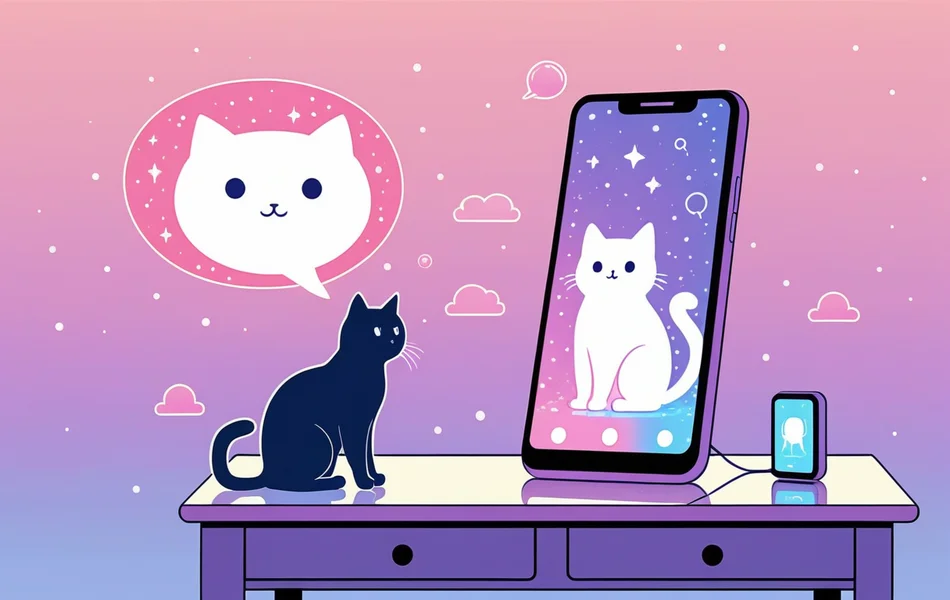
The cat, meanwhile, has no interest in recreating anyone’s texting style. It would like the living human in the room to put the phone down and address the very real bowl situation.