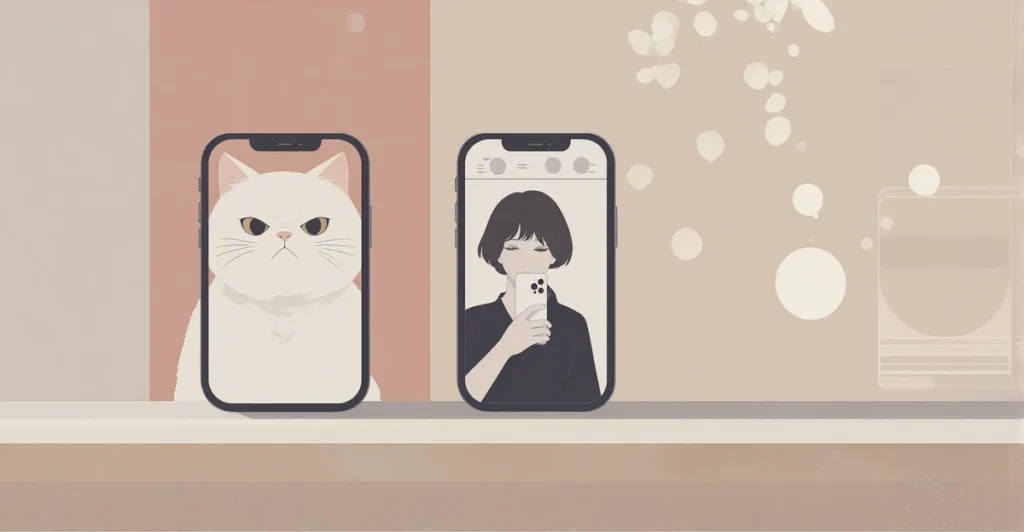
BeReal’s original pitch had a certain nerve: put down the lighting equipment and show your friends what you are doing. Lunch at a desk. A half-awake face. A cat performing a hostile takeover of the keyboard. Your ordinary Tuesday was suddenly the content.
That made it a useful counterpoint to polished Instagram feeds. It did not make its subsequent history a simple story of “Instagram copied it, therefore BeReal died.” BeReal is still a business, and its owner’s latest account gives that obituary an awkward problem.
Updated September 10, 2026: this article now distinguishes the authenticity debate from claims about BeReal’s audience and commercial performance.
What the authenticity pitch understood
A daily prompt and a short posting window make a different social invitation from an empty canvas labelled “impress everyone.” The attraction is permission to participate without turning a photograph into a production.
Of course, spontaneous-looking content can still be a performance. You can worry about looking effortlessly ordinary almost as much as you worry about looking glamorous. Humanity has an impressive ability to turn the absence of homework into homework.
Even so, a small exchange among friends can feel different from publishing to strangers. That is a worthwhile product idea, whether it grows into an enormous company or remains useful to a smaller audience.
The acquisition was not a funeral
In its June 2024 acquisition announcement, Voodoo valued BeReal at €500 million and described an audience of more than 40 million active users. “Active users” in that announcement should not be silently rewritten as daily active users. Our earlier claim of 73 million daily users was unsupported.
Voodoo’s March 2026 business update reported €30 million in BeReal revenue for 2025, a stabilized French audience and growth in Japan. It described a path to profitability by 2027, rather than saying profitability had already arrived. These are the owner’s statements, not an independent audit, but they plainly do not describe an app that disappeared.
Copying a feature does not explain everything
Large social networks can adopt formats that smaller services helped popularize. That gives them an advantage: many users already have people to follow there. It does not establish that one copied feature caused a rival’s every setback.
Network effects are a more useful lens than a cartoon villain twirling a Meta-shaped moustache. A beautifully designed social app still needs the people you want to hear from. Once those people stop posting, even a clever daily ritual can start to feel like checking an empty party.
Product changes, retention and the need to earn revenue all belong in the explanation. Without comparable audience figures and evidence about why people left or stayed, a definitive “who killed whom” narrative gets ahead of the facts.
Ordinary can be enough
The interesting tension survives. Can an app make everyday friendship its main attraction while also building a durable business? How much discovery, promotion and advertising can it introduce before the original experience changes?
There is no rule that amateur content is always authentic or professional content always engaging. Those are choices made by people, not properties baked into a camera. Our look at Spotify’s recommendations explores a related question: what happens when a system tries to predict what will keep your attention?
BeReal’s idea remains appealing even without a dramatic victory or defeat. Sometimes you just want to see your friend’s cat. Preferably before it sends the email.