
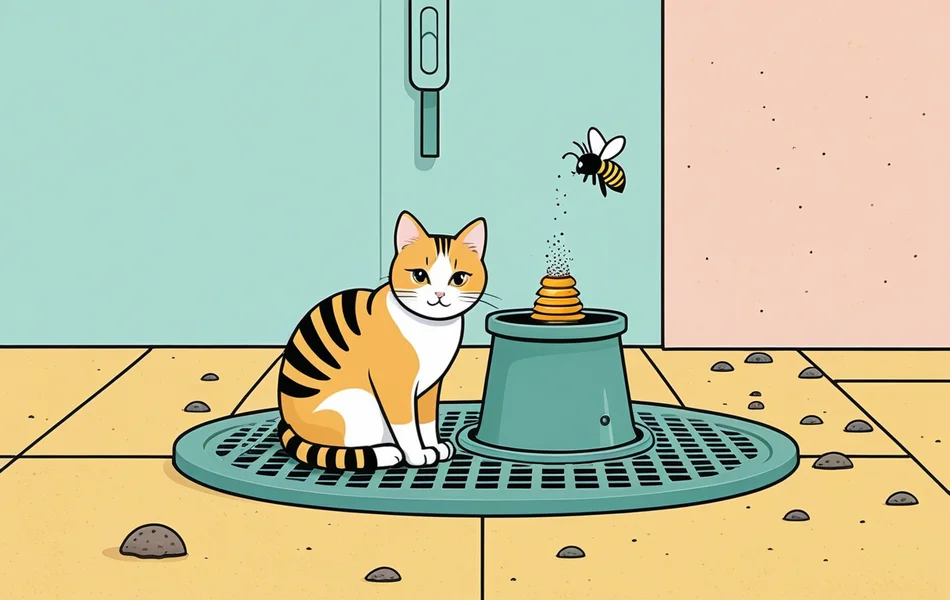
A South Philadelphia parking space has acquired an unusually large number of residents, none of whom can parallel park. The address is a sewer on Lambert Street.
In 6abc’s May 6 report, Mark Berman of Anna Bees Honey estimated that the colony could contain more than 10,000 bees. Neighbors marked off the space with a planter and signs.
A funnel, a trap box, and some patience
Berman’s funnel makes reentry difficult, encouraging bees into a trap box instead. He told the station that opening the sewer cover could provoke the colony.
He expected weeks of work, with honey promised for the neighbors afterward. The relocation was still a plan in progress.
There is something magnificent about a problem whose equipment list appears to include “funnel” and “wait.” Most urban emergencies would like a more photogenic solution. This one may be resolved by allowing a small traffic-management system to do its work.
The parking space has changed management
The neighborly part is especially appealing. A parking space is normally a patch of asphalt over which humans conduct intense diplomatic negotiations. Here, the immediate response included setting it aside for insects.
The colony has effectively secured temporary protection without filling out a single form. No lease, no deposit, no awkward conversation about whether the building permits pets. Just a great deal of purposeful coming and going.
Berman said he had not personally encountered bees living in a sewer before. That makes it unusual in his experience; it does not establish a first for Philadelphia, much less a new chapter in the entire history of beekeeping.
About that “sewer honey” nickname
The phrase is memorable enough to do most of the headline’s work on its own. It is also a nickname, not a description of how the honey will be assessed or handled.
There is no reason to turn the joke into a food-safety guarantee. The practical decisions belong with the person doing the work.
If it happens, the exchange will be wonderfully specific: surrender a parking spot for a while, receive an unusual story and possibly something for your toast. Your usual parking arrangement probably offers fewer breakfast benefits.
Animals keep finding alternative uses for our plans
The story sits nicely beside the crows pulling fibers from Rapunzel and Maximus at Tokyo DisneySea. Humans see an attraction or a piece of infrastructure. Another species sees a possible resource.
That comparison does not tell us why these particular bees chose this location. It just captures the mildly humbling part of sharing space with wildlife: our labels are not binding on everyone else.
A sewer is a sewer to us. To the colony, apparently, it passed an inspection whose paperwork has not been made available.
The cat’s preferred solution
No cat would approve this address without first checking the sun exposure and the likelihood of somebody opening a tin nearby. The bees appear to have used a different checklist.
Still, they have convinced humans to rearrange a small part of the neighborhood around their needs. That is a negotiating achievement a house cat can respect.
For now, the sensible ending is the one already underway: give the beekeeper room to work and let the relocation take its time. The honey is a possible bonus. Getting the bees into a more manageable home is the job.