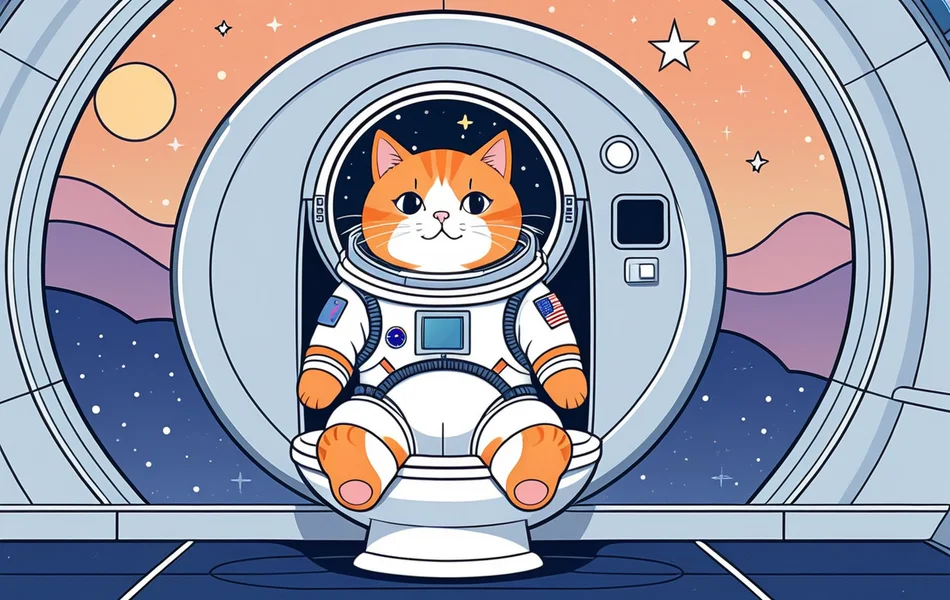
The Most Relatable Problem on a Trip Around the Moon
Four astronauts launched toward the Moon on April 1. Within hours, the toilet needed troubleshooting. Not the engines. Not the navigation system. The toilet. Humanity can calculate a route around another celestial body and still find itself having a conversation about the bathroom.
And somehow, this is the most honest thing that has happened in space exploration in decades.
What Was Reported During the Flight
NASA’s April 2 flight update says the crew reported a blinking fault light on April 1. Working with mission control, they troubleshot the issue and restored normal toilet operations. The first problem was real, but “it broke on day one” is only half that particular story.
Further trouble followed. Reporting from the April 4 mission briefing described a suspected frozen vent obstruction, backup urine-collection bags, and an odor reported near the bathroom. These were issues being assessed during the mission, rather than a finished engineering investigation establishing every cause.
It is tempting to turn the sequence into a neat chain of mechanical failures. It is also premature. A warning light, a problem moving waste out of the spacecraft, and an unusual smell are not automatically the same fault wearing three different disguises.
A Bathroom Without Gravity’s Help
The Universal Waste Management System is part of a development effort for spaceflight, not a luxury bathroom ordered from a catalog. Quoting a development budget as the price of one toilet makes a good headline, but it mixes up very different kinds of spending.
NASA’s 2020 explanation of the UWMS describes airflow doing work that gravity normally handles. Urine and solid waste have separate collection arrangements. The space-station version was described as smaller and lighter than the existing station toilet, while the design was also intended to support exploration missions.
Those distinctions matter. They do not make the situation any less funny. At home, the most advanced part of a toilet might be a button with two settings. In orbit, getting things to go in the correct direction is an engineering project.
Why the Small Systems Matter
Space toilets have a long history of being considerably less glamorous than the spacecraft around them. That should surprise nobody who has shared a small apartment with three other people. Even with gravity included in the rent, the bathroom eventually becomes a central topic.
Artemis II is testing Orion with a crew. Food, exercise, sleep, hygiene, and waste management are part of whether a vehicle works for people, not optional decorations attached to the rocket science. The jokes and the engineering significance can coexist.
A problem found during a test flight deserves investigation and follow-through. It does not prove that nobody tested the system beforehand, and it does not tell us the final redesign before engineers have finished examining the evidence. We can appreciate improvised problem-solving without inventing an imaginary meeting in which everyone forgot space was cold.
The Breakout Star Nobody Ordered
The crew has completed its lunar flyby and is heading home, with splashdown still ahead. Historic distances and extraordinary views compete for attention with a plumbing story. This feels unfair to the Moon, which has made a considerable effort to look impressive.
But a broken toilet is understandable in a way orbital mechanics rarely is. Most people cannot picture the calculations behind a lunar trajectory. They can immediately picture the expression on someone’s face when the only bathroom is temporarily unavailable.
The internet naturally turns that contrast into a meme-worthy moment. Beneath the jokes is something rather wonderful: humans are traveling around the Moon, bringing their ordinary, inconvenient, bodily needs along. Exploration remains a mixture of extraordinary ambition and figuring out where to put the bags.