Close your eyes during a film and listen for a drink being poured, shoes crossing gravel, or a coat rustling. Some of those sounds may have been captured during filming; others were added later. Among the people supplying that physical detail are Foley artists, who perform sounds in sync with the picture. If you have ever wondered how movie sound effects are made, this corner of the job is stranger and far more hands-on than you might expect.
Foley is one of those invisible jobs that holds the entire illusion of cinema together. When it works, you never notice it. When it fails, a punch sounds like a wet towel and the whole scene collapses. This guide breaks down what Foley is, where it came from, how a Foley artist actually works, and why a cabbage can sound exactly like a breaking neck.
Table of Contents
- What Is Foley?
- Why Films Record Sound Twice
- A Short History of Foley
- How Foley Is Made: Inside the Studio
- The Three Categories of Foley
- Famous Foley Tricks and the Props Behind Them
- Foley vs Sound Design vs Sound Effects
- Why Foley Still Matters in 2026
- Frequently Asked Questions
What Is Foley?
Foley is the practice of creating and recording everyday sound effects in sync with a finished picture. Footsteps, rustling clothes, clinking glasses, creaking doors, fists hitting bodies, paper tearing, a key turning in a lock. These are called Foley sounds, and a Foley artist performs them live while watching the scene on a screen, matching the timing and character of the movement.
The name comes from Jack Foley, a sound man at Universal Studios who pioneered the technique in the late 1920s and 1930s. The word stuck so firmly that the whole craft, the people, and the studios all carry his name. A Foley artist is sometimes called a Foley walker, because so much of the job is performing footsteps.
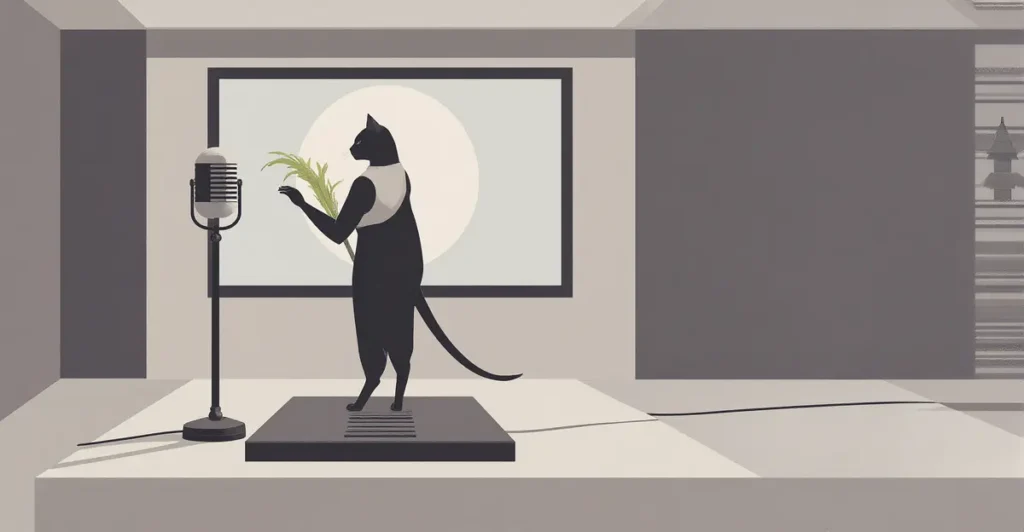
Here is the part that surprises people. The prop making the sound need not be the object on screen. A Foley artist snapping celery can supply a convincing crunch for a fictional injury, while gloves can suggest flapping wings. Sometimes the real object is exactly right; sometimes the unexpected substitute wins. Berklee’s guide to Foley artists describes the imagination behind that collection of props. The goal is a sound that belongs to the scene.
Why Films Record Sound Twice
This is the question that unlocks everything. Why bother recreating sounds that already happened during filming?
Production sound crews often prioritize clear dialogue, while also collecting useful sounds and ambience when possible. A location recording may contain unwanted noise, or a particular movement may be too faint to serve the scene. Dialogue may sometimes be replaced through ADR, a separate post-production process. None of this means the microphone can hear only voices or that everything else on set is discarded.
Foley can replace missing detail, strengthen an existing sound, or add a deliberately shaped performance. A villain’s footsteps can feel heavier. A nervous character’s hands can fidget more audibly. The final soundtrack may combine production recordings, library effects, field recordings, and Foley. The interesting part is how those ingredients work together, rather than counting every sound as a studio replacement.
There is a practical reason too: dubbing. Sounds tied to the original dialogue recording can disappear when that dialogue is replaced for another language. A separate music-and-effects mix supplies the background world for dubbed versions, and Foley helps fill gaps in that material. It is one contributor to the mix, rather than a guarantee that every international version consists of an untouched Foley track plus new voices.
A Short History of Foley
Recorded synchronized sound became commercially important during the transition to talkies in the late 1920s. Before that, film exhibition could already include music and live effects, so audiences were not always sitting in silence and imagining every noise. New recording workflows created new ways to coordinate those sounds with the picture.
Jack Foley and the Birth of the Craft
Jack Foley worked at Universal during that transition. An account preserving his own later recollections describes music and effects being added together to Show Boat, released in 1929. Performers watched the picture while supplying sounds alongside the orchestra. His work became central to the craft’s identity, and his name became its familiar label. Coordinating sounds with the moving picture demanded a performer’s sense of rhythm.
How the Craft Evolved
Foley developed around performance: learning which shoe suited a character, collecting useful objects, and matching action on screen. Digital recording made it easier to edit and align individual takes. The timing can be adjusted afterward, but choosing how a tired person drags a boot or hesitates over an object remains a creative decision.
How Foley Is Made: Inside the Studio
A Foley stage looks like a cross between a junkyard and a theater. There is a large screen at one end, a microphone setup in the middle, and a chaos of objects everywhere else. The most important feature is the floor, which is not really a floor at all. It is a grid of removable pits filled with different surfaces.
A stage may offer surfaces such as gravel, sand, wood, and concrete, with other materials brought in as needed. The artist selects footwear and a surface, then matches the movement on screen. Snow can be suggested with a substitute such as cornflour; using one is practical and controllable, not proof that recording actual snow could never work.
The artist performs, while the Foley mixer or engineer handles recording and helps shape the captured sound. Berklee describes that recording role. Editing then refines timing and prepares takes for the wider soundtrack. Team size and the order of work vary with the production; footsteps, cloth, and props can be recorded separately and combined later.
The Three Categories of Foley
Foley work is traditionally divided into three buckets, and understanding them is the fastest way to understand how movie sound effects are made.
- Feet. Footsteps are a major part of the job when a scene needs them recreated or reinforced. Different shoes, surfaces, weights, and gaits all change the emotional read of a character. A confident stride and a frightened shuffle are pure Foley acting.
- Moves. Also called cloth, this covers the rustle of clothing and body movement. When a character crosses their arms, sits down, or pulls on a jacket, a Foley artist provides the soft friction of fabric that makes the body feel real.
- Specifics. These are the props and individual sound events. A glass set on a table, a sword unsheathed, a phone picked up, a punch landing. Specifics are where Foley gets the most inventive and where the strangest props come out.
Famous Foley Tricks and the Props Behind Them
These are examples to experiment with, rather than a universal recipe book. A 2016 workshop with Foley artist Ruth Sullivan demonstrated how everyday materials can suggest surprisingly different actions. The performance, recording, and picture all help sell the substitution.
- Breaking bones: a celery snap can provide a sharp fictional crunch.
- Stretching textures: cabbage leaves can supply a fibrous tearing or stretching sound.
- Rain: chickpeas in a box or tapping fingers can suggest a patter.
- Footsteps in snow: a bag of cornflour can provide a creaking crunch.
- Bird wings: flapping leather gloves can suggest the movement of wings.
These substitutions work through recognizable texture, rhythm, and synchronization. The viewer sees the action while hearing a carefully chosen sound, and the two become one event. Microphones do not automatically flatten every real source into something unusable. A substitute simply gives the artist a useful sound they can perform and control. Suggestion does some of the work, just as it does in found-footage horror.
Foley vs Sound Design vs Sound Effects
These terms overlap, but point to different aspects of the work. Foley is one way to create sound effects; sound design includes broader creative decisions about the soundtrack.
Foley is performed live in sync with the picture and covers the human-scale sounds of bodies and props, the things a character touches and does. It is grounded and physical.
Sound effects often come from libraries or field recordings. A car engine, a gunshot, an explosion, or city ambience might be pulled from a recorded archive rather than performed on a stage.
Sound design shapes the sonic world and how it supports the story. It can involve imaginary creatures or spaceships, but it also includes realistic environments and everyday events. Choosing how to make an ordinary room feel comforting or threatening is a design decision too. ScreenSkills describes the layering of different sounds for the final mix. Foley, recorded effects, and editing can all contribute to that design.
Why Foley Still Matters in 2026
Software can generate or assemble sounds, including attempts to synchronize them with video. The 2024 Video-Foley research project investigates that problem. It would be misleading to say no machine can attempt it, just as a research demonstration does not prove that a whole production role has been replaced. Timing, expressive choices, revisions, and integration with the film remain important parts of the job.
Foley carries emotion as well as information. Someone alone in a house at night can become much more vulnerable through a hesitant step, a stair creak, or an unexpectedly loud switch. The sound directs attention. The audience does not need to know where it came from for the scene to work.
The next time you watch a film, listen for the footsteps. Notice the difference between tile and carpet, the coat shifting as someone turns, or the weight of a glass meeting a table. You may not be able to identify which sounds came from the location and which were added later. That seamless blend is part of the achievement. Somewhere in the process, someone may have spent a very serious afternoon choosing exactly the right shoe.
For more film craft breakdowns and the occasional cat at the cinema, browse our coverage of cult releases like the A24 Backrooms movie and reviews such as Apple TV’s Widow’s Bay.
Frequently Asked Questions
Why is it called Foley?
The craft is named after Jack Foley, a sound man at Universal Studios who developed the technique of performing sound effects live in sync with film in the late 1920s and 1930s. His name became the standard term for both the practice and the people who do it.
Are all footsteps in movies fake?
No. A soundtrack can retain production footsteps, add Foley, use recorded effects, or combine them. Foley is particularly useful when the sound needs clearer timing, a different texture, or more dramatic emphasis.
What is the difference between Foley and sound design?
Foley commonly supplies synchronized performances of footsteps, cloth, and props. Sound design is broader: it shapes the sonic world, including realistic and invented sounds. The work can overlap rather than forming two completely separate categories.
Why do Foley artists use weird props instead of the real thing?
A substitute can offer the right texture and be easier to perform in sync. The real object may also work perfectly well. Choosing, recording, and matching the sound is the craft; an unusual prop is one useful option.
Can artificial intelligence replace Foley artists?
Audio-generation research can produce and synchronize effects, but that does not settle whether it can replace an artist’s full role on a particular production. Quality, control, context, and the ability to respond to creative direction all matter. Claims that audiences always detect synthetic sound are too broad.
Conclusion
Foley is a performance hidden inside the soundtrack, helping a world on screen feel physical and alive. A person watches, listens, and moves in time, perhaps turning celery into a crunch that belongs to something entirely different. Once you know the craft exists, an ordinary footstep becomes worth listening to. The cat already knew a well-timed crash could command the whole room.